
How Many Watts Does a Power Inverter Use?
Most people read “1000W” on an inverter box and assume the unit uses 1000 watts all the time. It does not. An…
Read Full Guide →
Most people read “1000W” on an inverter box and assume the unit uses 1000 watts all the time. It does not. An…
Read Full Guide →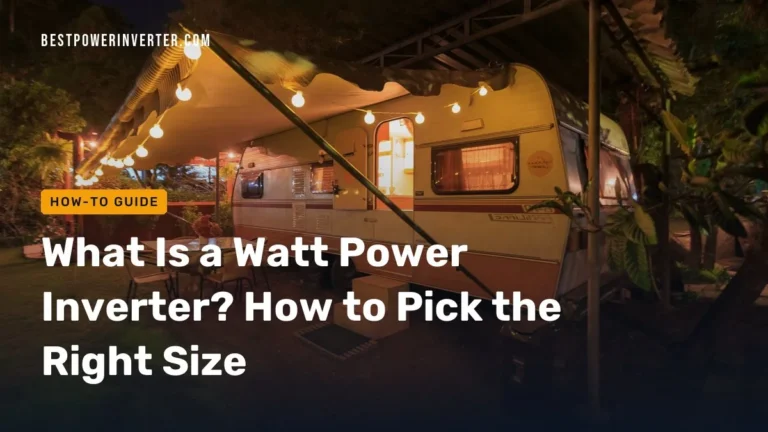
Anyone sizing an inverter for a car, RV or backup power setup should read the watt rating first: it shows how much…
Read Full Guide →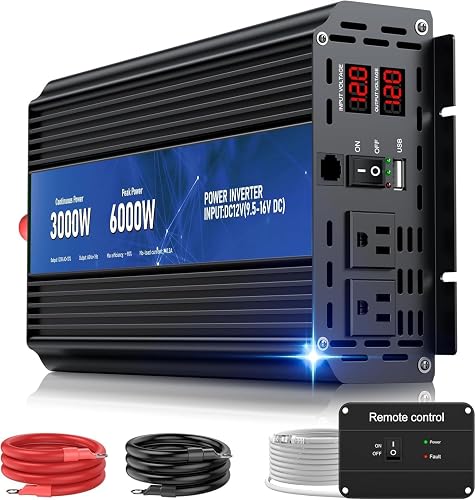
Running 1,000 watts of AC appliances from a 12V RV battery bank pulls about 100 amps from the batteries, so how you…
Read Full Guide →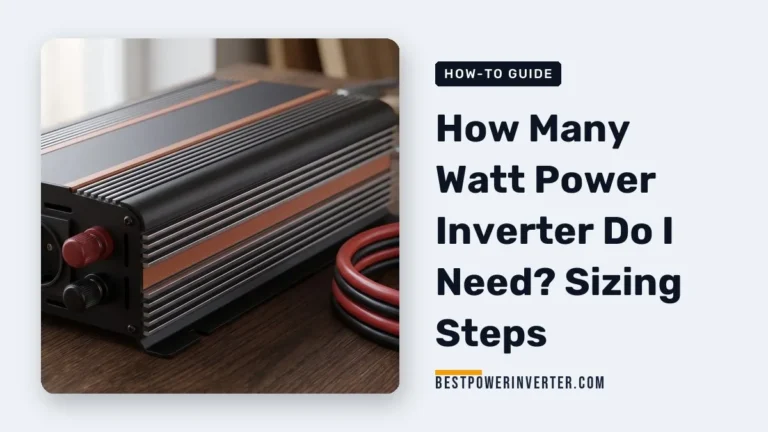
Most people size an inverter by looking at one appliance label and buying the number they see. That is how you end…
Read Full Guide →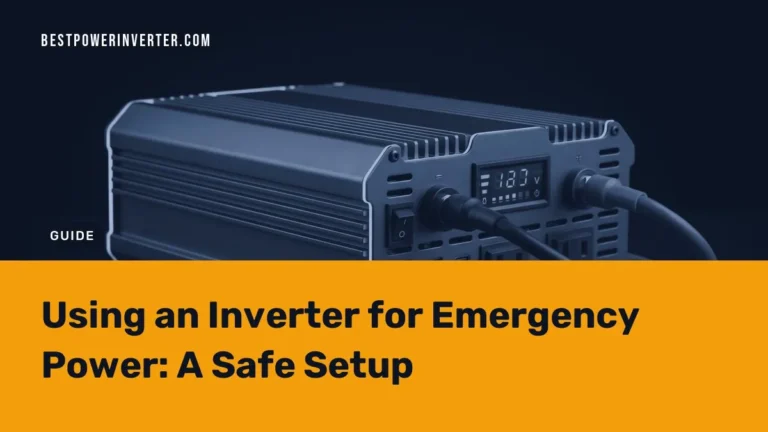
Bigger inverters belong on the battery with a fuse, not in the dashboard socket. Small ones can run phones, lights and radios…
Read Full Guide →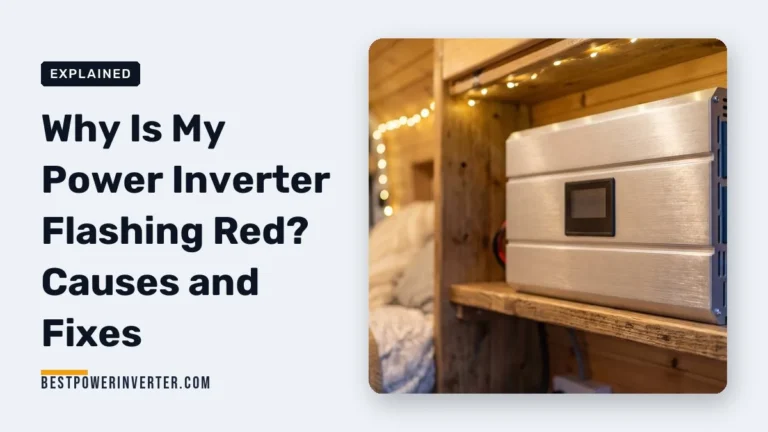
A solid red light and a flashing red light are not the same warning, and neither one means the same thing on…
Read Full Guide →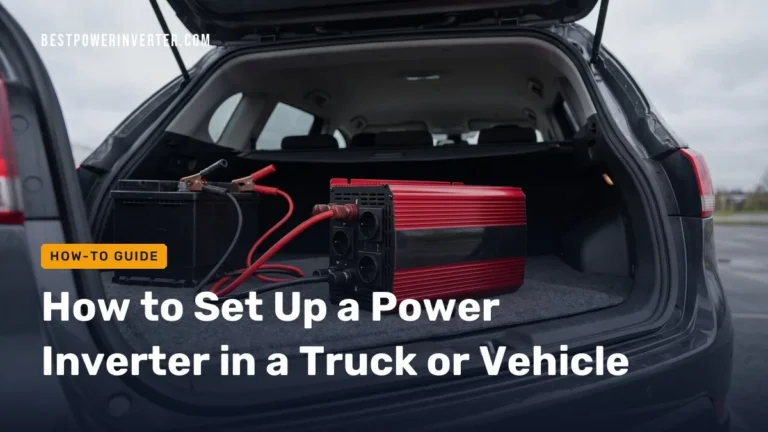
Mount the inverter on a solid, dry, ventilated surface, run correctly sized cables to the battery, and fit the specified fuse in…
Read Full Guide →
Total the running watts of the appliances you must keep on, divide by 0.8 to get VA, and choose the next inverter…
Read Full Guide →
Low input voltage, a blown fuse, or a loose cable causes most power inverter no output problems, so check those before you…
Read Full Guide →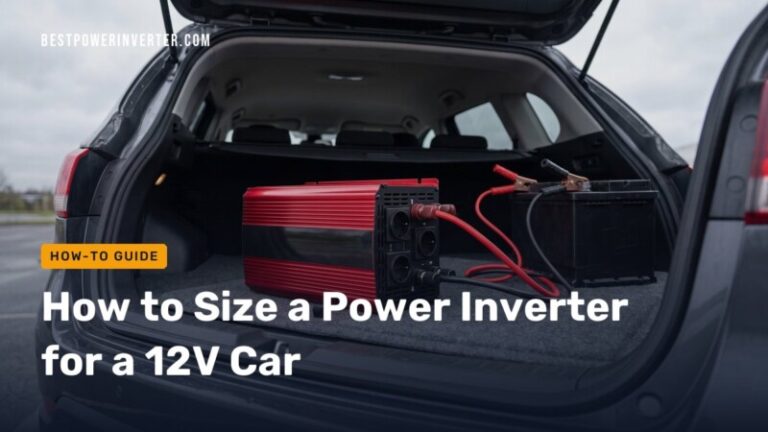
This guide is for drivers who want AC power in the car for phones, a laptop, or a small appliance and do…
Read Full Guide →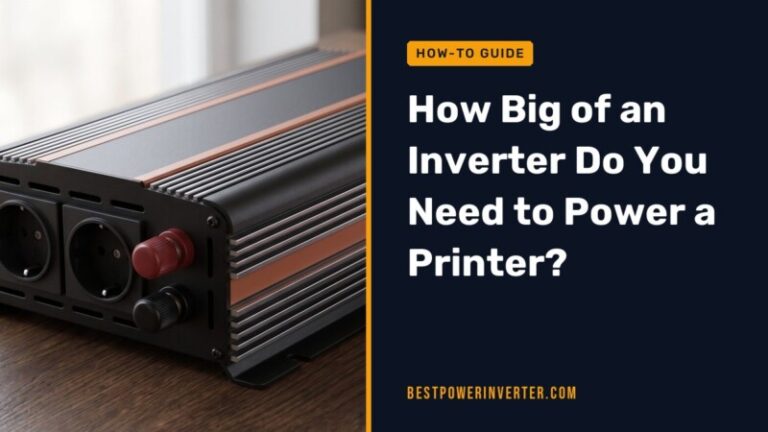
Inkjet printers draw roughly 15 to 75W, while laser printers can draw 500 to 2000W, according to Eaton. For a small inkjet,…
Read Full Guide →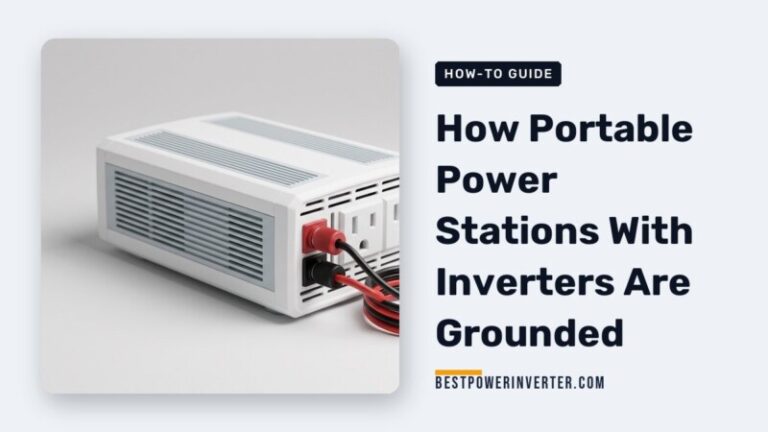
Most portable power stations use a floating neutral, so the AC output is not tied to ground inside the unit the way…
Read Full Guide →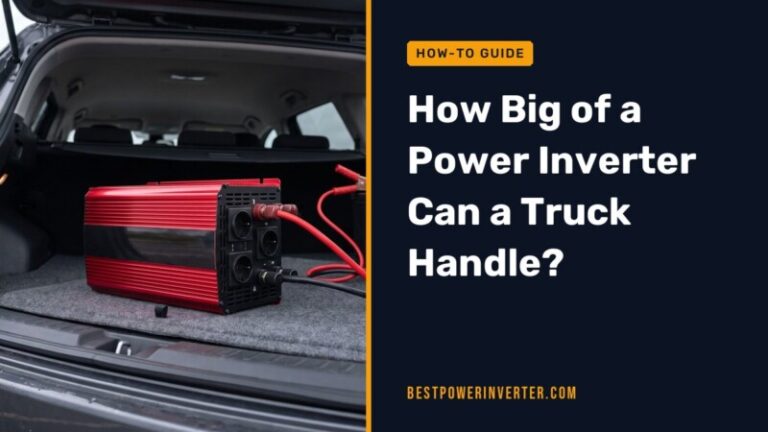
Truck owners, owner-operators, and DIY upfitters who want 120V power need to size the inverter to the truck, not the other way…
Read Full Guide →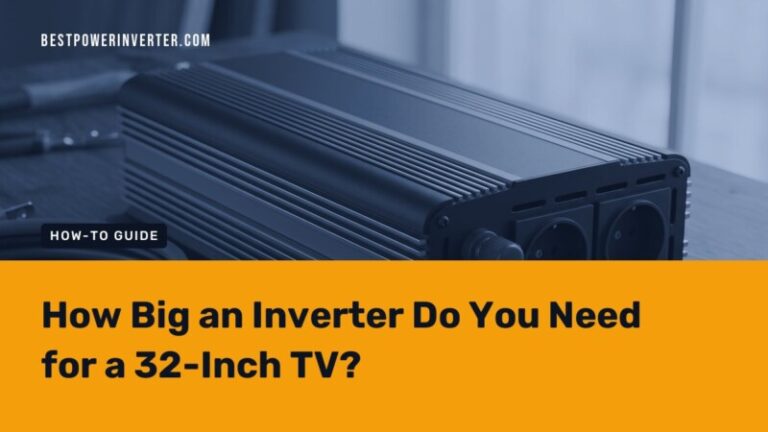
Most 32-inch TVs run fine on a 150-watt pure sine wave inverter, and 300 watts is the safer pick if you add…
Read Full Guide →
For a true 5000W continuous load, a 5000W inverter is the minimum, but a 6000W unit is the safer buy once you…
Read Full Guide →