
How to Install a Power Inverter in Your Vehicle Safely
Small inverters up to about 150-300W can plug into a 12V accessory socket. Anything larger must be hard-wired to the battery with…
Read Full Guide →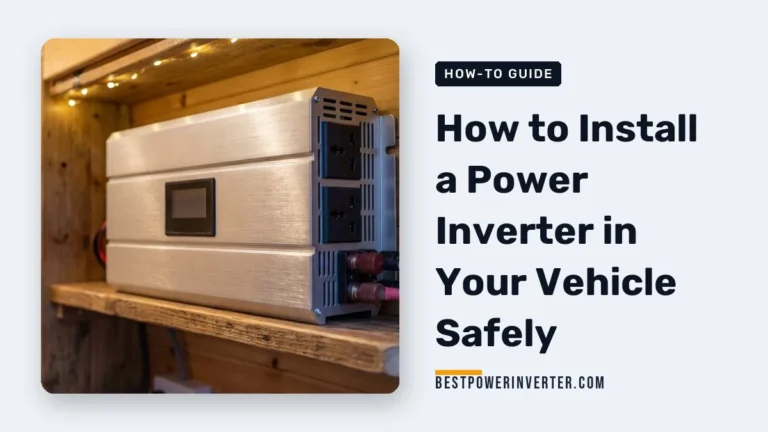
Small inverters up to about 150-300W can plug into a 12V accessory socket. Anything larger must be hard-wired to the battery with…
Read Full Guide →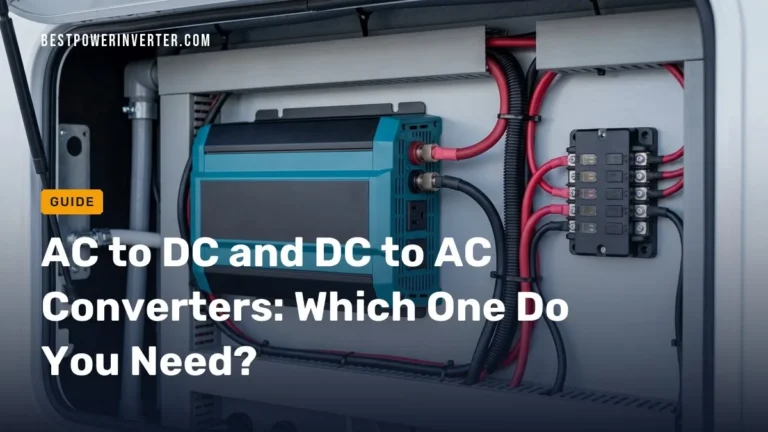
Anyone who wants to charge a battery from a wall outlet, or run a blender from a battery, needs two different devices.…
Read Full Guide →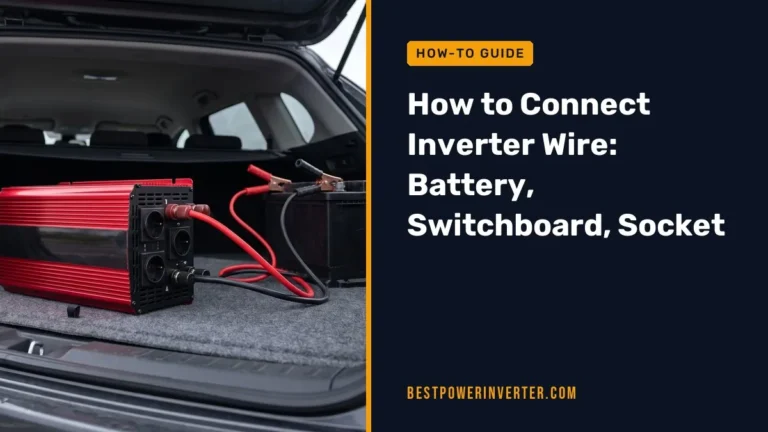
Inverter connection wire must match what your inverter and battery manuals specify for maximum current, cable length, and allowable voltage drop. The…
Read Full Guide →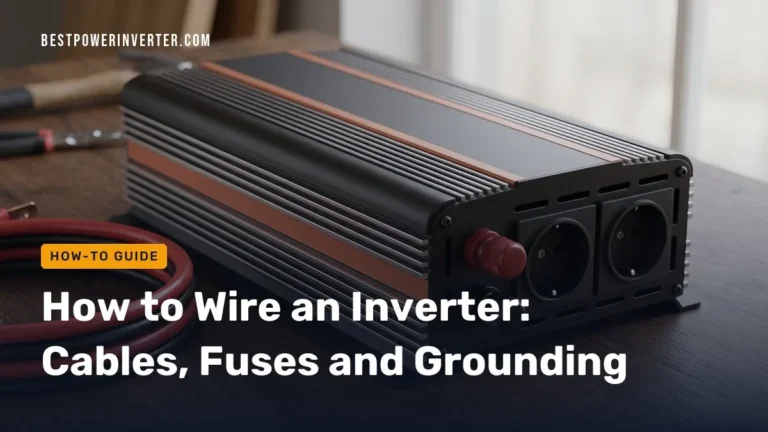
Wire an inverter with properly sized positive and negative cables to a battery matching its voltage, a fuse and disconnect close to…
Read Full Guide →
Off-grid campers and RV owners planning basic power systems need to know exactly which household devices their battery bank can support. A…
Read Full Guide →
Many DIYers destroy their power systems by wiring an inverter directly to a household breaker panel without a transfer switch. You must…
Read Full Guide →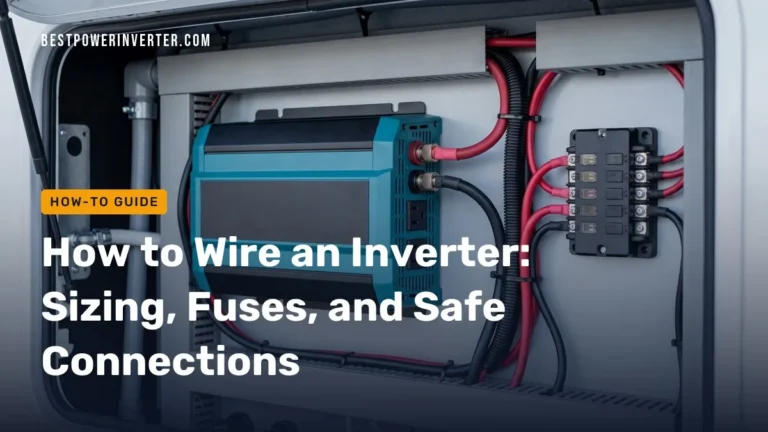
Wiring an inverter requires correctly sized positive and negative DC cables, a properly rated fuse mounted near the battery, and tight, polarity-correct…
Read Full Guide →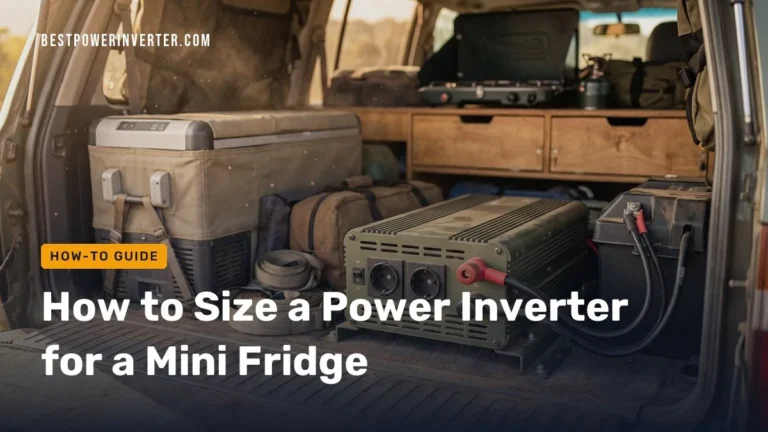
Most mini fridges draw only 40 to 100 watts while the compressor runs, but they can pull 120 to 400 watts for…
Read Full Guide →
Most people pick an inverter by the drill’s horsepower or by guessing, and then the inverter trips the moment the trigger is…
Read Full Guide →
An inverter turns DC power into AC power, and it usually steps the voltage up while doing it, such as 12 V…
Read Full Guide →
Battery voltage is the DC voltage an inverter is built to receive from its battery bank, most often 12V, 24V, or 48V.…
Read Full Guide →
Many people add up every appliance in the house and compare the total to 5,000 watts. That is the wrong test. A…
Read Full Guide →
Inverters use power when they are switched on with nothing plugged in. The idle draw is usually 0.5-3% of rated output, so…
Read Full Guide →
Add up the running watts of everything you’ll use at once, then pick an inverter rated 20-25% above that total, with a…
Read Full Guide →
Most inverter battery problems come from two choices: how you charge the battery and how deeply you drain it. Good maintenance means…
Read Full Guide →