
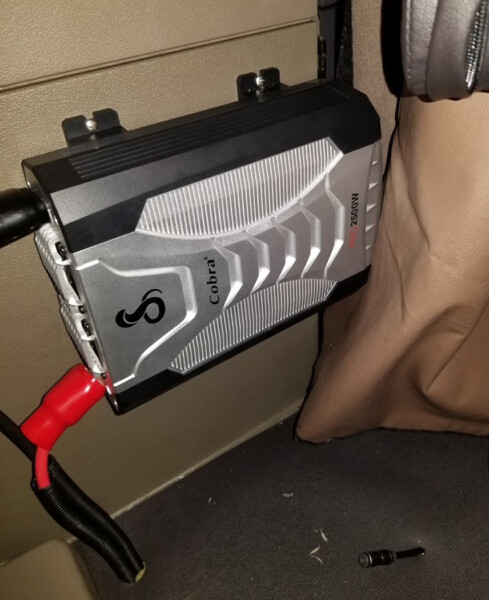
Mount a power inverter in a dry, cool, well-ventilated spot inside the cab, sleeper, or a protected compartment, as close to the battery as practical. Keep it out of the engine bay and away from fuel or vapors, leave clearance around its vents, and keep the DC cables short.
An inverter converts the truck’s 12 V or 24 V DC power to 120 V AC for laptops, tools, microwaves and similar loads. Placement affects how hot it runs, how much power is lost in the cables, and whether a fault can become a fire. Cab-level spots such as under or behind the seat are common because they are dry and close to the batteries, but each has trade-offs, covered below.
Secure mounting stops the unit shifting on rough roads and straining the cables. Always follow the installation manual for your model, since clearances, fuse sizes and cable gauges differ between inverters.
Credit: www.familyhandyman.com
Choosing The Right Location
The safest spot is dry, cool and ventilated, with room around the vents and a short, protected cable path to the battery. Keep it away from water and heat sources, and never near fuel lines, fuel tanks or other flammable materials.
Airflow matters because inverters shed heat through vents and a fan. Cobra’s installation manual calls for a cool, dry, ventilated area inside the vehicle, at least 1 inch (3 cm) of clearance around the unit, and horizontal mounting. A Thermo King 2000 W inverter manual asks for at least 3 inches (7.6 cm) of airspace. Treat 1 inch as the bare minimum for small units and use 3 inches or more on larger ones, and follow your own manual if it differs.
Also leave access to the on/off switch, outlets, status lights and fuse. You will want to read fault indicators and unplug loads without removing a seat or panel. A spot that is easy to reach but 15 feet from the battery is usually the wrong trade, as the wiring section below shows.
Placement differs by truck type:
| Location | Best for | Ventilation | Battery distance | Verdict |
|---|---|---|---|---|
| Cab (under or behind seat) | Pickups, crew cabs, day cabs | Fair; needs clearance on all vent sides | Short to medium | Good if the space is not packed with gear |
| Sleeper | Class 8 sleeper trucks | Good in an open cabinet or bunk compartment | Medium; depends on battery box location | Good if the cable path is protected and short |
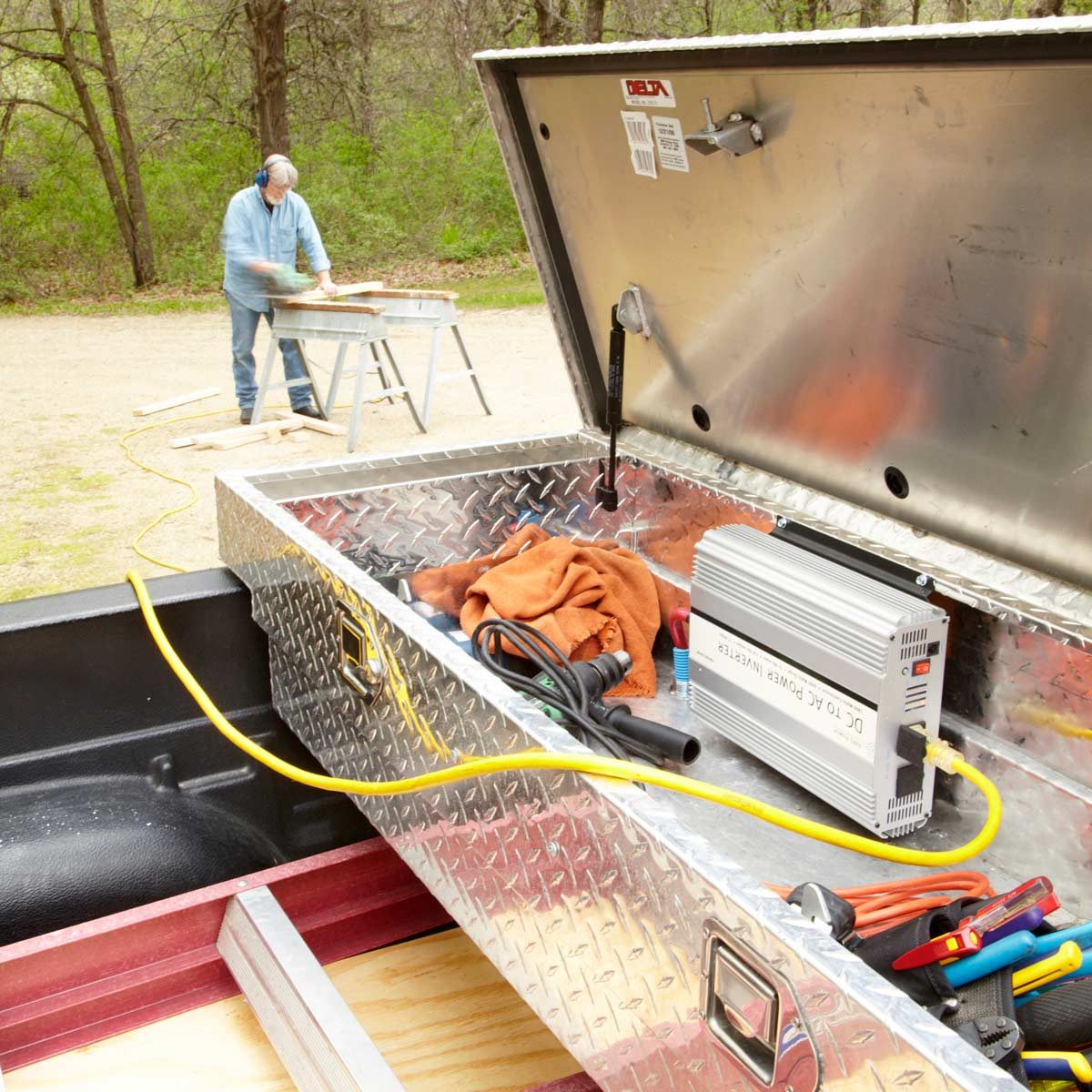
| Storage bay or service compartment | Service and work trucks | Good if vented, but the area must be dry and weather-protected | Varies | Acceptable; keep it away from fuel, solvents and tool clutter |
| Engine bay or battery bay | None | Poor; hot and dirty | Very short | Avoid |
A Havis technical sheet says its inverter can be installed in the cab or an outside service compartment, provided the area is dry and protected from weather.
Location checklist:
- Dry: no leaks, splash, condensation or washdown spray.
- Cool: away from the engine, exhaust, heater ducts and direct sun.
- Ventilated: clear space at the vents and fan, nothing stacked on top.
- Accessible: switch, outlets and fuse reachable.
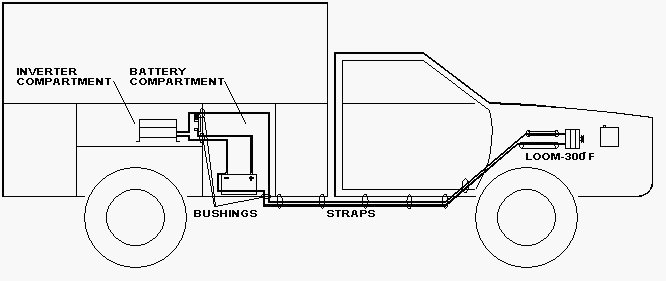
- Close to the battery: short positive and negative runs.
- Away from fumes: no fuel, flammable or corrosive vapors, and no battery gas pockets.
- Secure: bolted to a solid surface, mounted horizontally if the manual says so.
Credit: www.tenfourmagazine.com
Under The Seat
Pros: The inverter is protected from weather and out of sight, and the space is often close to the battery or the cable path. It uses space that would otherwise go unused.
Cons: Ventilation is limited, dust and debris collect, and a tight fit can block vents. Some under-seat areas also hold seat heaters, airbag modules or wiring harnesses that must not be disturbed.
Measure the space before buying and include the cable bend radius, since thick cable does not turn sharply. Leave at least the clearance in the manual around the vents, and do not store bags or jackets against the unit. Fasten it with strong brackets or bolts, route cables away from seat rails and moving parts, and vacuum the area now and then to limit dust buildup. If the inverter feels hot to the touch or the fan runs constantly, the space is too tight or the load is too large.
Behind The Seat
Behind the seat saves space and keeps the cabin tidy, and in many pickups it is easy to reach. Power cables can be hidden along trim, and the seat back dampens the fan noise somewhat.
The drawbacks are heat and airflow. This spot is often packed with tools, jackets or cargo that can cover the vents, and sun through the rear window can warm it. Make sure the inverter has clear space around its vents and that nothing is stacked against it. Measure the space first, because not every inverter fits, and allow room for cables and plugs. If cargo tends to shift, a cover or guard bar keeps items from hitting the unit.
Credit: www.magnum-dimensions.com
In The Truck Bed
The bed is a poor default location. It is exposed to rain, snow, road spray and dust, and it is usually far from the battery, which means long cables. An inverter there needs a weatherproof enclosure, but a sealed box traps heat. Use an enclosure that is rated for the environment and still provides airflow as the manufacturer specifies. Rubber gaskets and silicone sealant keep water out, so check them regularly and confirm the inside stays dry.
Bolt the inverter to a rigid surface with strong brackets, since bolts hold better than screws under vibration. Arrange cables neatly, protect them where they pass through metal, and secure them with zip ties so they cannot rub or swing. If you must use the bed or an outside service compartment, choose a model designed for it and keep the cable run as short as possible.
Under The Dashboard
The space under the dashboard is often unused, and a small inverter can fit there. The problems are airflow and safety. Dash areas are cramped, can be warm from the heater core and electronics, and sit near pedals, steering parts and airbag wiring. Leave clearance at the vents and fasten the inverter so it cannot drop or shift.
Wiring is tricky here. Keep the DC cables short to limit voltage drop, make every connection tight, and use wire clips to keep the cables organized. Loose connections can arc and heat up, which is a fire risk. Keep cables well away from pedals and controls, and use proper insulation and grommets to prevent short circuits.
Inside The Glove Compartment
A glove compartment is reachable and protected from water and dirt, so it suits only a very small inverter. Most units, particularly anything above a few hundred watts, will not fit with room for vents, cables and plugs.
Space and heat are the limits. A closed glove box has no airflow, and an inverter in it can overheat, especially with papers and other items packed around it. Do not run a high-draw load from there, and do not use it as storage for the cables or other items. A cigarette-lighter inverter is a better match for that spot than a hardwired unit.
Custom Enclosures
A custom enclosure suits trucks that have no good open spot, such as work trucks with a toolbox or cabinet. The design should keep the inverter accessible, protected from water and dust, ventilated, and free of vibration. Do not close the vents off: vent openings, a fan opening, or a gap for airflow need to remain clear.
Material affects how it performs. Metal enclosures are durable and conduct heat away, but they need insulation where cables pass through. Plastic is lightweight but can soften near heat. Rubber mounts absorb shocks but are not strong enough to carry the load alone. Composite materials balance strength and flexibility. Whatever the material, mount the inverter on a rigid surface and keep clearance at the vents.
Can You Put A Power Inverter Under The Hood?
No. Manufacturer and fleet guidance says to install the inverter inside the cab or a storage compartment, not under the hood. Engine bays and battery bays are hot and exposed to moisture, fuel, oil, and flammable or corrosive vapors. Batteries can also vent hydrogen, which an inverter’s switching components can ignite. The short cable run is the only advantage, and it does not outweigh the heat and fire risk. Avoid floors directly above the exhaust, too.
Cable Length And Voltage Drop: A Worked Example
Low-voltage DC carries high current, so cable length has a big effect. As Heavy Duty Trucking advises, place the inverter as close to the batteries as is safely practical to reduce cable length and voltage drop. This is an illustrative calculation, not a measurement. Assume a 1500 W inverter on a 12 V system at about 85% efficiency, which draws roughly 147 A at full load. Assume 1/0 AWG copper cable at about 0.12 milliohm per foot, counting both the positive and negative runs.
| Install | One-way cable | Total cable | Voltage drop at 147 A | Other factors |
|---|---|---|---|---|
| Under-seat, near battery path | 4 ft | 8 ft | About 0.14 V (about 1.2%) | Dry, cooler cab air; clearance for vents |
| Under-seat with a longer detour | 10 ft | 20 ft | About 0.35 V (about 2.9%) | Still dry, but more voltage lost as heat in the cable |
| Engine bay | 2 ft | 4 ft | About 0.07 V (about 0.6%) | Heat, moisture, fumes; unit may exceed its rated temperature |
The engine bay wins only on voltage drop, and the difference in watts is small. The under-seat install loses a little more to cable resistance but keeps the inverter cool and dry. The longer the run, the more you must increase cable gauge to compensate. Follow the manufacturer’s cable and fuse table, put the fuse close to the battery as the manual directs, and keep cable away from sharp edges, exhaust parts and cab-floor routes near engine heat. Use grommets where cable passes through metal.
Frequently Asked Questions
What Is The Best Place For A Power Inverter In A Truck?
Inside the cab, sleeper or a protected compartment, close to the battery. Under or behind the seat works in many pickups if there is clearance for the vents. In a sleeper, a vented cabinet with a short cable path is best.
Can I Install A Power Inverter In The Truck Bed?
It is possible, but not ideal. The inverter needs a weatherproof, ventilated enclosure, firm mounting, and a cable run that is long enough to cause voltage drop. A cab or protected compartment is usually better.
Is It Safe To Mount A Power Inverter In The Cab?
Yes, if it has ventilation clearance, secure mounting and a fused cable run. The cab keeps the inverter dry and away from engine heat and fumes.
Should The Power Inverter Be Near The Battery?
Yes, as close as is safe and practical. Shorter cables lower voltage drop and heat in the wiring. Do not trade away ventilation or dryness for a few inches of cable.
How Much Clearance Does An Inverter Need?
Cobra specifies at least 1 inch (3 cm) around its inverter, and Thermo King specifies at least 3 inches (7.6 cm). Check your manual and keep the vents and fan clear.
Should An Inverter Be Mounted Horizontally Or Vertically?
Follow the manual. Cobra says to mount its inverter horizontally. Some units allow vertical or wall mounting, but keep the vents unobstructed and avoid positions where dust or liquid can fall into them.
Conclusion
Pick a dry, cool, ventilated spot inside the cab, sleeper or a protected compartment, and keep the cables as short as is practical. Leave clearance at the vents, secure the unit against vibration, and avoid the engine bay, battery bay and any area with fuel or vapors.
Use the checklist before you drill, and check the manufacturer’s manual for clearances, cable gauge and fuse size.