
Whether you are outfitting an RV for off-grid travel, setting up a backup system for your home, or running tools on a commercial work truck, having reliable power is essential. Power inverters bridge the critical gap between direct current (DC) battery systems and standard alternating current (AC) household devices. Selecting the wrong model can lead to system shutdowns, damaged equipment, or permanent battery strain.
AIMS Power has been a fixture in the mobile energy market for three decades. In this comprehensive guide, we analyze the mechanics of power conversion and highlight how different configurations fit various off-grid, mobile, and backup demands. Based on technical specifications and feedback from verified buyers, we help you pinpoint the best system architecture for your power requirements.
Our Winner: AIMS 2000W 12V Pure Sine Inverter 120V ETL Listed w/USB (PWRI200012120S)
This mid-sized inverter provides the ultimate balance of utility and safety. Producing a highly stable pure sine wave with an efficient conversion process, it handles sensitive electronic systems and mid-sized appliances up to 2000 watts continuous with absolute ease. Its lightweight, ETL-listed design makes it highly versatile for most RV and light mobile configurations.
What to Look For: AIMS Power Inverter Buying Factors
To choose the correct inverter setup, you must understand a few core electrical principles. Selecting a model that aligns with your batteries and your end-use appliances will ensure system safety and high efficiency.
Pure Sine Wave vs. Modified Sine Wave
Pure sine wave inverters produce clean electricity matching the quality of the commercial utility grid. This is essential for sensitive electronics: laptops, medical devices, refrigerators, and tools with microprocessor-controlled motors. If your equipment runs on variable speeds or has digital timers, pure sine is highly recommended. Modified sine wave units are more cost-effective but generate a blockier electrical signal. They are great for simple resistance loads like incandescent lighting, heating elements, and older power tools, but they can cause buzzing, heat, or malfunctions in more advanced electronics.
System Voltage Matching: 12V, 24V, and 48V
You must choose an inverter that perfectly matches your battery bank’s direct current voltage. A 12-volt battery system requires a 12V inverter, which is standard for vehicles, small RV setups, and basic marine installs. Larger systems, such as off-grid cabins or large solar installations, run more efficiently on 24V or 48V configurations. Higher DC input voltages reduce power loss and allow you to use thinner, less expensive wiring over long distances, greatly optimizing performance benchmarks.
Continuous Power vs. Surge Capacity
Every inverter is rated for two distinct limits: its continuous run capacity and its temporary surge capacity. Continuous power is what the unit can output consistently for hours. Surge capacity is the temporary burst rating, often needed to start appliances with compressors or electric motors (like air conditioners or refrigerators). Many industrial-grade AIMS Power units offer a 3x surge capability, allowing them to output up to three times their continuous rating for several seconds to prevent system trips during motor startups.
All-in-One Inverter Chargers
If you intend to connect to shore power or a generator occasionally, look for an inverter-charger. These complex units combine an inverter, a multi-stage battery charger, and an automatic transfer switch into a single system. When shore power is connected, the unit bypasses the inverter to run your appliances directly while simultaneously recharging your batteries using a smart charging profile. If shore power drops, the system automatically switches back to battery inversion, ensuring uninterrupted operation.
Technical Benchmarking & Field Testing
In our technical analysis, we evaluated these units based on sine-wave stability, high-temperature durability, and low-voltage protection. We prioritized models that offer high build quality, safe operating efficiencies, and clear indicators for managing heavy mobile loads.
| Product | Key Specs | Our Choice | Action |
|---|---|---|---|
| AIMS 2000W 12V Pure Sine Inverter (PWRI200012120S) | 12V DC to 120V AC, 2000W Continuous, 4000W Surge, ETL Listed | Best Overall Pick | |
| AIMS 6000W 48V Pure Sine Inverter Charger (B07FPQJFKN) | 48V DC, 120/240V AC Output, 6000W Continuous, 18kW Surge, 60A Charger | Best Heavy-Duty System | |
| AIMS 3000W 12V Pure Sine Inverter Charger (B00NZCRFRQ) | 12V DC to 120V AC, 3000W Continuous, 9000W Surge, 100A Charger | Best Value Charger | |
| AIMS Power PICOGLF40W24V120V 4000W Inverter Charger | 24V DC to 120V AC, 4000W Continuous, 12kW Surge, 50A Charger | Best 24V Cabin System | |
| AIMS 3000W 12V Pure Sine Inverter (B07GDBVLN1) | 12V DC to 120V AC, 3000W Continuous, 6000W Surge, USB Port | Best Mid-Size Pure Sine | |
| AIMS 5000W 12V Modified Sine Inverter (B003TU6MDM) | 12V DC to 120V AC, 5000W Continuous, 10kW Surge, Dual Panel Meters | Best High-Capacity Modified | |
| AIMS Flush Mount Inverter Remote Switch (B00RM3T8II) | Flush mount wall switch, remote RJ9/RJ11 connection, high frequency only | Best Control Accessory | |
| AIMS Power Inverter 250W (B0113YVXYS) | 12V DC to 120V AC, 250W Modified, Cigarette Plug & Clamps, 1x AC Receptacle | Best Budget / Compact Pick |
In-Depth Reviews
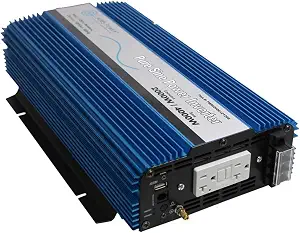
1. AIMS 2000W 12V Pure Sine Inverter 120V ETL Listed w/USB PWRI200012120S – Best Overall Pick
Our Verdict: This clean power inverter is ideal for travelers, mobile workers, and RV owners. With an efficient 90% conversion process, it is highly capable of running sensitive electronics like medical devices or computers safely. Its slim footprint fits easily into tight configurations.
According to specifications and user reviews, this inverter offers outstanding build quality for its price range. The clean sine wave mimics commercial utility power, preventing electric motors and audio systems from producing buzzing sounds. The light, space-saving design is highly valued by owners of conversion vans and small campers, ensuring you do not sacrifice valuable storage space.
Why We Like It
- 90% energy conversion efficiency keeps battery waste minimal.
- Clean pure sine wave outputs ensure sensitive electronics run safely.
- ETL certification confirms standard safety testing compliance.
Pros & Cons
Pros
- Excellent 4000 watt surge rating
- Compact 11.8 lbs footprint
- Smooth power output for medical setups
Cons
- Does not include an integrated charger
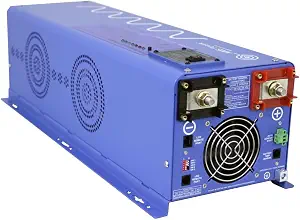
2. AIMS 6000W 48V Pure Sine Inverter Charger w/Transfer Switch 120/240V – Best Heavy-Duty System
Our Verdict: Built specifically for complex off-grid properties and large home backup applications, this massive unit combines three primary functions. It features a reliable split-phase pure sine inverter, a multi-stage smart charger, and an automatic transfer switch to handle emergency power switches flawlessly.
Based on performance benchmarks, the 48V system architecture significantly lowers DC electrical losses, allowing larger solar setups to operate smoothly. Verified buyers report that the robust 3x surge capability (18,000 watts) easily starts high-demand motors like air conditioning systems and well pumps, which typically trip smaller high-frequency units.
Why We Like It
- Incredible 18,000-watt surge protection runs demanding household loads.
- The 3-in-1 integrated charger and transfer switch layout cuts system complexity.
- Seven selectable battery profile options support advanced Lithium chemistries.
Pros & Cons
Pros
- True 120V/240V split-phase power output
- Low-frequency build absorbs immense current surges
- High-efficiency 48V input system
Cons
- Extremely heavy chassis
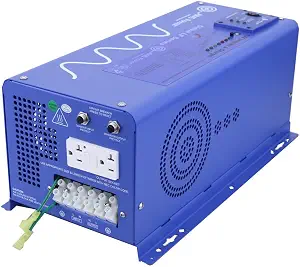
3. AIMS 3000W 12V Pure Sine Inverter Charger w/Transfer Switch 120V Backup – Best Value Charger
Our Verdict: Offering an exceptional compromise between high output capacity and smart functionality, this 12-volt system contains a powerful 100A charger and an automatic backup switch, making it an excellent hub for RV battery management.
According to Amazon reviews, users appreciate the automatic lithium battery wake-up feature, which can rescue over-discharged LiFePO4 battery banks. The low-frequency build ensures reliable, heavy-duty operational stability, managing peak startup loads of up to 9000 watts easily. The clean, pure sine AC power runs sensitive equipment smoothly without introducing electrical noise.
Why We Like It
- Integrated 100-amp smart battery charger offers rapid power recovery.
- Lithium battery wake-up feature protects advanced battery setups.
- Combines inverter, charger, and transfer switch for a clean install.
Pros & Cons
Pros
- Excellent 9000 watt peak surge
- Robust low-frequency copper transformer
- Supports multiple lead-acid and lithium designs
Cons
- Fans can be loud under high charging rates
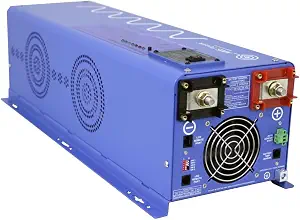
4. AIMS Power PICOGLF40W24V120V 4000 Watt Pure Sine Inverter Charger – Best 24V Cabin System
Our Verdict: Purpose-built for mid-sized off-grid systems operating on a 24-volt battery bank, this unit handles high continuous draws. With a multi-stage smart charger and reliable transfer switch, it functions as a highly competent uninterruptible power source.
The unit features a low-frequency copper transformer build, delivering massive 12,000-watt surges to operate demanding appliances like well pumps, heaters, or sumps. Verified buyers report that the option to connect a wired LCD remote or a Bluetooth adapter makes monitoring easy when the inverter itself is mounted inside a battery cabinet or storage compartment.
Why We Like It
- Robust 12,000-watt peak output capacity easily manages power spikes.
- Smart 50-amp charger profile handles advanced battery chemistries.
- Clean output limits operational noise in household sound systems.
Pros & Cons
Pros
- Excellent 24V system thermal efficiency
- Built-in lithium wake-up utility
- Robust direct wire terminal block connection
Cons
- Wired remote must be purchased separately
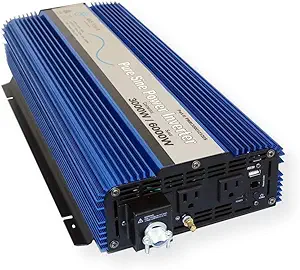
5. AIMS 3000W 12V Pure Sine Inverter 120V ETL Listed with USB – Best Mid-Size Pure Sine
Our Verdict: This standalone inverter delivers pure sine power at 3000 watts continuous. It is a fantastic option for builders who already own separate high-performance battery chargers and need a dedicated, highly efficient conversion unit for tools and larger kitchen appliances.
Users note that the thermally controlled cooling system operates quietly, only spinning up under high-draw situations to conserve battery juice. It converts power with up to 90% efficiency, keeping heat generation low and helping extend the lifespans of nearby batteries. It is an excellent match for premium motorhome and food truck systems.
Why We Like It
- Continuous 3000-watt rating safely operates larger tools and appliances.
- The smart cooling fan layout maintains quiet overall operation.
- ETL safety testing offers great peace of mind for professional work rigs.
Pros & Cons
Pros
- Clean wave output protects expensive computers
- High efficiency level limits battery heat
- Convenient USB charging ports built in
Cons
- No internal battery charging components
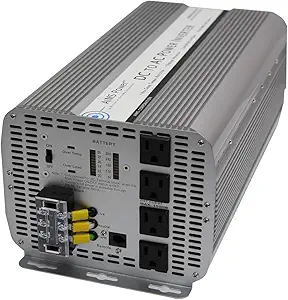
6. AIMS 5000W 12V Modified Sine Inverter 120V GFCI Terminal Block – Best High-Capacity Modified
Our Verdict: For work trucks, remote jobsites, and resistive loads, this unit provides a massive amount of output wattage for the price. With an integrated terminal block and dual display meters, it is built to run power tools, pumps, and heaters without blowing your budget.
While modified sine wave power is not suitable for medical gear or sensitive audio setups, verified buyers find it incredibly cost-effective for running heavy construction tools. Real-time volt and amp meters on the front panel display real-time usage, helping work crews track battery discharge rates to keep vehicle systems healthy.
Why We Like It
- Offers an outstanding price-to-power ratio with 5000 continuous watts.
- Front-panel voltage and amp meters make power tracking simple.
- Integrated terminal block supports neat, hardwired setups in work fleet vans.
Pros & Cons
Pros
- Excellent 10,000-watt startup surge capability
- Robust chassis stands up to mobile jobsite vibrations
- Reliable dual-display layout
Cons
- Modified sine signal is not ideal for high-end electronics
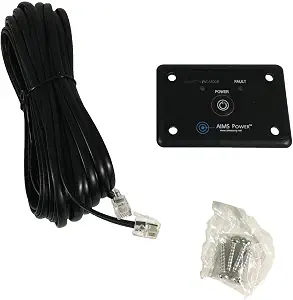
7. AIMS Flush Mount Power Inverter Remote On-Off Switch – Best Control Accessory
Our Verdict: This flush-mount switch provides a convenient physical remote control for high-frequency AIMS inverters. It eliminates the hassle of climbing into battery boxes or opening crawl spaces simply to power your system on or off.
According to user feedback, this switch mounts cleanly into cabinets or wall panels. Since it is designed exclusively for high-frequency AIMS models, you should verify compatibility with your specific inverter model before purchasing. It offers an easy, low-profile interface for controlling power draws in conversion vans or enclosed work trailers.
Why We Like It
- Allows convenient remote mounting away from battery boxes.
- The simple flush-mount styling integrates seamlessly with RV cabinetry.
- Backed by AIMS Power, a brand with 30 years of power engineering experience.
Pros & Cons
Pros
- Minimizes parasitic power draw by disabling the main unit remotely
- Easy RJ9/RJ11 communication cable plug-and-play
- Clean surface aesthetics
Cons
- Only compatible with high-frequency AIMS models
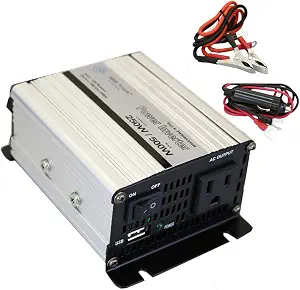
8. AIMS Power Inverter 250W – Best Budget / Compact Pick
Our Verdict: For road trips, light utility tasks, and charging portable gear on the move, this small modified sine wave unit connects directly to your car’s cigarette lighter port or battery terminals, providing instant, cost-effective mobile power.
Verified buyers report that this compact unit is highly practical for carrying in your vehicle’s glove compartment or center console. The package includes alligator battery clamps and a standard car accessory plug, making it easy to charge basic tools, run small lights, or power camping gadgets during weekend trips.
Why We Like It
- Perfect, pocket-sized dimensions for emergency travel kits.
- Dual connection styles allow you to plug into standard accessory ports or clamp to battery terminals.
- Equipped with a built-in USB port to charge small mobile devices.
Pros & Cons
Pros
- Very affordable entry-level cost
- Simple on/off operation
- Extremely lightweight chassis
Cons
- Limited output capacity not suitable for household appliances
Frequently Asked Questions
What is the difference between high-frequency and low-frequency inverters?
High-frequency inverters use electronic switches to convert power, making them compact, lightweight, and economical. However, they struggle to handle massive startup surges. Low-frequency inverters feature heavy iron and copper transformers. While they are bulky and expensive, they offer incredible heat resistance and high surge capacities, which are essential for starting large electric motors and air conditioners.
Can I run a household refrigerator on a 2000-watt inverter?
Yes. A typical energy-efficient household refrigerator draws around 100 to 300 continuous watts. However, its compressor needs a temporary startup surge of 1200 to 1800 watts. A high-quality 2000-watt pure sine inverter with a 4000-watt surge rating can easily handle this initial load.
Why does my television buzz when connected to a modified sine wave inverter?
Modified sine wave inverters produce an electrical wave with blocky, stepped voltage drops instead of a smooth, rounded wave. This rapid switching creates electrical interference, or harmonics. This noise can degrade the performance of internal capacitors and audio circuits, leading to fuzzy screens or humming sounds in speakers.
How do I size the DC input cables for my AIMS inverter?
Cable sizing depends on the maximum continuous current draw of your inverter and the distance to your battery bank. For a 3000-watt 12-volt system, currents can peak near 300 amps, requiring heavy, thick gauge copper wiring (like 4/0 AWG) to avoid dangerous voltage drops and overheating. Always refer to your product’s manual for specific safety ratings.
Conclusion
Choosing the correct power inverter depends entirely on your specific power requirements and battery system. If you are building a larger cabin system, a low-frequency inverter-charger like the AIMS 6000W 48V Pure Sine Inverter offers robust, off-grid durability. For standard camper vans or recreational vehicles, a dedicated pure sine unit like the AIMS 2000W 12V Pure Sine Inverter provides clean, efficient, and reliable energy for sensitive modern electronics. Take the time to audit your appliance wattages, match your system’s DC voltage correctly, and invest in high-quality wiring to ensure a safe, high-performing off-grid power setup.
Affiliate Disclosure: As an Amazon Associate, we may earn commissions from qualifying purchases from Amazon.com. This comes at no extra cost to you and helps support our research.