
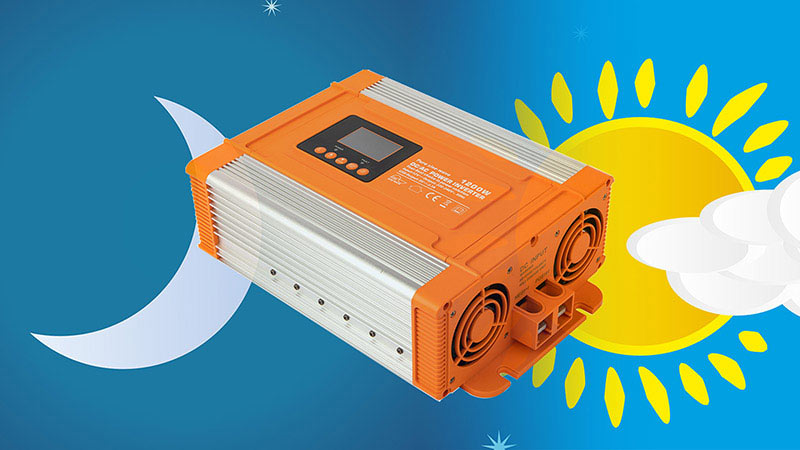
Yes, it can be fine to leave an inverter on all the time, provided the system is built for continuous operation and the battery and charging source can cover the inverter’s idle draw. For most people, though, running it 24/7 wastes stored energy, so it is better to switch it off whenever nothing needs continuous AC power.
An inverter keeps drawing current from the battery after its AC output has nothing connected. Manufacturer manuals, such as the TSI PRO Series manual, warn that standby current continues even with the AC output disconnected, which creates a deep-discharge risk if the unit is left on unattended.
Whether this matters depends on the size of the battery bank, the charging source and what you plug in. A small 12V bank with no charging can be flattened in a couple of days, while a large solar-charged bank can carry the same idle draw without trouble.
Inverter Basics
An inverter changes DC power from a battery into AC power for household-style appliances. It is used in homes for backup during power cuts, and in RVs, campervans, boats and off-grid solar systems as the main source of AC power.
The inverter pulls DC from the battery, converts it, and sends AC to the connected loads. The conversion circuitry, control board and cooling fan need power to stay ready, even when no load is connected. That is the idle draw this article is about.
| Type | Description |
|---|---|
| Pure Sine Wave | Produces clean power. Best for sensitive devices such as CPAP machines, laptops and fridges with electronic controls. |
| Modified Sine Wave | Less expensive. Suits simple resistive devices, but may cause buzzing or heat in some motors and electronics. |
| Square Wave | Cheapest. Not suitable for most modern devices. |
Energy Consumption
An inverter that is switched on but running no load still consumes standby power. Published figures vary widely by design and size. A standby-drain example in a campervan inverter guide lists roughly 6 W to 12 W for common 1,000 W to 2,000 W units. One inverter manual lists idle current of about 0.5 A to 1.2 A depending on model size. Larger hybrid and off-grid inverters in the 3 kVA to 10 kVA range may draw about 10 W to 35 W continuously, and some residential solar inverters sit as low as 0.4 W to 1.2 W.
The table below converts those ranges into daily energy, and into amp-hours for a 12V battery (Ah = Wh ÷ 12). The 12V figures for the 3 kVA to 10 kVA units are for comparison only, since units of that size normally run on 24V or 48V.
| Inverter type | Typical idle draw | Energy per 24 hours | Equivalent at 12V |
|---|---|---|---|
| Grid-tied residential solar inverter | 0.4 W to 1.2 W | about 10 Wh to 29 Wh | about 1 Ah to 2.4 Ah |
| Small 12V inverter (0.5 A idle) | about 6 W | 144 Wh | 12 Ah |
| Common 1,000 W to 2,000 W inverter | 6 W to 12 W | 144 Wh to 288 Wh | 12 Ah to 24 Ah |
| Inverter idling at 1.2 A | about 14.4 W | about 346 Wh | about 29 Ah |
| Hybrid or off-grid inverter (3 kVA to 10 kVA) | 10 W to 35 W | 240 Wh to 840 Wh | 20 Ah to 70 Ah |
Many inverters offer a sleep, search or ECO mode that cuts idle draw until a load is detected. The catch is that very small loads, such as a phone charger, may fall below the wake-up threshold and not start the inverter. Check the no-load current on the spec sheet before buying, because a high peak efficiency percentage says little about idle consumption. Efficiency above 90% under load is common, yet two inverters with the same peak rating can have very different standby draw.
Safety Concerns
Running an inverter continuously is generally safe when it is installed to the manufacturer’s instructions, kept ventilated and not overloaded. Most inverters have built-in protection against overload, over-temperature and low battery voltage, but those protections are a backstop, not a substitute for correct installation. The inverter’s manual sets the clearances, cable sizes and fuse ratings, so follow it.
Overheating Risks
Inverters produce heat, and overheating shortens component life and can trigger shutdowns. Mount the unit where air can flow around it, away from engine bays, closed cupboards packed with gear and direct sun. Keep fan intakes clear of dust. Heat sinks and casings can be hot enough to burn skin. If the unit repeatedly shows an over-temperature alarm, reduce the load or improve airflow rather than resetting it again and again.
Fire Hazards
Most inverter fires trace back to installation problems: undersized cables, loose terminals, missing fuses or overloading. A loose DC connection creates resistance and heat at high current. Fit a correctly rated fuse or breaker close to the battery, check terminal tightness at intervals, and keep flammable materials away from the inverter. Replace any cable or connector that shows discoloration or melted insulation.
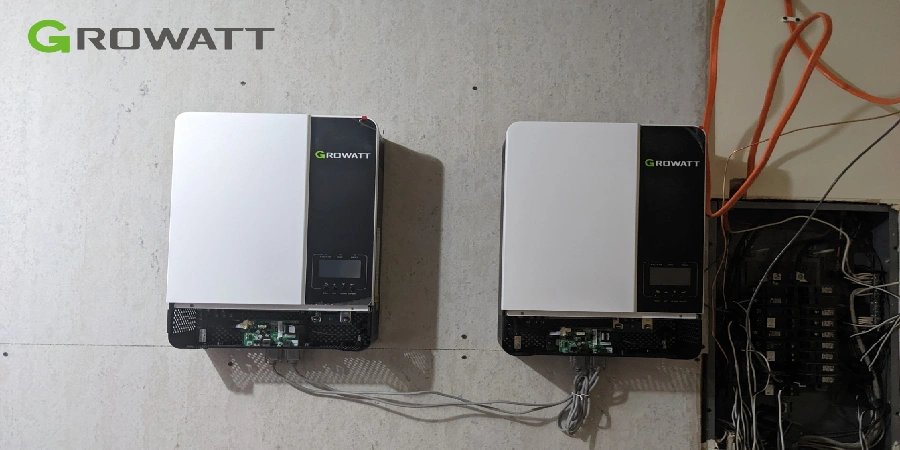
Credit: igrowattinverter.com
Battery Life
Leaving an inverter on will drain the battery, slowly but without pause. The risk to battery health comes from deep discharge. If idle draw runs for days with no charging, lead-acid batteries can sink below 50% charge, which shortens their life, and sulfation can set in if they stay that way. Lithium (LiFePO4) batteries tolerate deeper discharge, but a battery management system will cut off at low voltage, so the inverter and everything on that bank go dark.
Worked example: 24 hours of idle draw
- Take a 12V inverter that idles at 1.0 A. Power is 1.0 A × 12 V = 12 W.
- Over a day that is 12 W × 24 h = 288 Wh.
- In amp-hours at 12V, 288 Wh ÷ 12 V = 24 Ah per day.
- A 100 Ah lead-acid battery has about 50 Ah usable if you stay above 50% charge. Idle draw alone would use that in a little over two days with no charging.
- A 100 Ah LiFePO4 battery has roughly 80 Ah to 100 Ah usable. The same idle draw takes about three to four days to use it up.
A battery that is also running a fridge, lights and other loads will reach the cutoff far sooner. If you forget to switch the inverter off before leaving an RV or boat unattended with no solar input, a flat battery on return is the most likely result. Good battery care still applies: keep terminals clean and tight, check for corrosion, follow the charging profile recommended for your battery chemistry, and avoid overcharging.
Environmental Impact
Idle draw is wasted energy. If your battery is charged from the grid, or from a generator or alternator burning fuel, every watt-hour lost to standby is energy that had to be produced. A 10 W idle draw adds up to about 7.2 kWh a month, which is small for one household but meaningful for a solar or generator system sized tightly.
If the energy comes from solar panels that would otherwise be curtailed on a full battery, the idle draw has little environmental cost. It still shortens the time your battery can carry real loads through the night or on cloudy days.
Running a smaller inverter that matches your actual load, or switching off a large one when it is not needed, cuts waste. Inverter lifespan depends mainly on heat, load and installation quality, so extra running hours are not a reason to avoid continuous duty if the unit is properly cooled.

Credit: www.ecgsolax.com
Cost Implications
On a mains-connected backup system, the cost is the electricity used by the idle draw. Multiply idle watts by 24 hours, divide by 1,000 to get kWh per day, then multiply by your tariff. As an illustration only, using a rate of $0.17 per kWh:
| Idle draw | kWh per month (30 days) | Cost per month at $0.17/kWh |
|---|---|---|
| 6 W | 4.3 kWh | about $0.73 |
| 12 W | 8.6 kWh | about $1.47 |
| 35 W | 25.2 kWh | about $4.28 |
The money is modest. On an off-grid or mobile system the real cost is stored capacity: the 288 Wh a day from the worked example is energy you cannot use for lights, a fridge or a laptop, and replacing it takes solar panel area or generator run time. Phantom loads like this belong in your energy budget; the guide to phantom loads in off-grid energy budgets explains how to account for them.
Cost works the other way too. If an inverter keeps a freezer full of food cold or a medical device running through an outage, a few dollars of standby energy is a small price. A properly sized inverter and battery also protect appliances from the voltage dips and switching that come with an unstable supply.
Practical Scenarios
Continuous operation makes sense when equipment needs uninterrupted AC power and the battery or charging system is sized to cover the inverter’s idle energy as well as the load. Typical continuous-duty cases include home backup with a UPS function, servers and network equipment, security systems, and a fridge or freezer that must not lose power. Commercial sites usually run inverters this way, with units rated for heavy-duty operation and scheduled maintenance.
Occasional-use cases are different: charging a laptop, running a hair dryer, using a power tool or a coffee maker. For these, switch the inverter on when needed and off afterward.
Rule of thumb by use case
- Home backup: leave it on if it is an automatic backup or UPS-type inverter designed to transfer in an outage, with the battery kept on a charger. A manual inverter used only for emergencies can stay off until needed.
- RV and campervan: switch it off when you are driving, sleeping with nothing AC-powered, or away from the vehicle. Leave it on only for a specific AC load, and note that a fridge with a 12V or DC option is usually the better choice for overnight running.
- Marine: turn it off when leaving the boat unattended unless bilge pumps or a shore-charged battery system are designed around it. Idle draw on a swinging mooring with no shore power can flatten a house bank.
- Solar off-grid: continuous running is normal with a properly sized array and bank. Include the idle draw in your daily energy budget, and compare a low-idle inverter against the cost of extra panels and batteries.
Specific loads
- CPAP: if you need AC overnight, leave the inverter on, and check the machine’s draw, since a heated humidifier raises it considerably. Many machines have a DC cord that avoids the inverter altogether.
- Fridge: the compressor cycles on and off, and a fridge needs the inverter on at all times. Include inverter idle draw plus the fridge’s average consumption in your energy budget.
- Laptop charging: turn the inverter off when the laptop is full, or use a DC-DC charger to skip the inverter.
Checklist: leave it on or turn it off?
- Is there a load that needs AC power around the clock? If not, turn it off.
- Do you know the inverter’s no-load current from the spec sheet or manual? If not, look it up or measure it with a DC clamp meter.
- Can the charging source (solar, shore power, alternator) replace the daily idle energy plus the load?
- Is the battery above its safe minimum, with a low-voltage cutoff or monitor?
- Will anyone be present to notice alarms, heat or a flat battery?
- If any answer is no, turn the inverter off, or use a remote switch, timer or ECO mode.
A remote on/off switch, a relay tied to the ignition or a battery monitor with a low-voltage disconnect makes it much harder to leave the inverter running by accident.
Credit: topindustriesinc.com
Expert Opinions
Manufacturer manuals and technical articles agree on the main point: continuous running is acceptable when the system is designed for it, and the idle draw has to be accounted for in the battery and charging plan. They differ on whether it is worth it for light or occasional use, and the figures above show why.
Electrical Engineers
Inverter manuals warn that idle current keeps flowing even when AC output is disconnected, which can lead to deep discharge of the battery. They also state that the unit needs adequate ventilation and correctly sized cables and fuses. Built-in protections against overload, over-temperature and low battery voltage reduce the risk, but they do not replace switching off a system left unattended with no charging source.
Energy Consultants
Off-grid energy-budget guidance treats inverter standby as a phantom load that should be counted in the daily total. For small systems, that often means switching the inverter off or using a low-power mode. For hybrid and solar systems with larger banks, the standby draw is small next to production and is typically accepted as part of the design. A guide to why an inverter drains a battery with no load explains the mechanism in more detail.
Frequently Asked Questions
Is It Safe To Leave An Inverter On?
Yes, with correct installation. Provide ventilation, use properly sized cables and fuses, avoid overloading and check connections periodically. Leaving it on overnight is safe from a fire and heat standpoint when these are in place; the more common problem is battery drain, not danger.
Does Leaving An Inverter On Consume More Power?
Yes. Even with nothing plugged in, most inverters draw between a few watts and around 35 W, depending on size and design. A 10 W idle draw uses 240 Wh a day, which is 20 Ah from a 12V battery. A sleep or ECO mode lowers this.
How Much Power Does An Inverter Use When Nothing Is Plugged In?
Published figures include about 0.5 A to 1.2 A for small 12V units, 6 W to 12 W for common 1,000 W to 2,000 W models, and 10 W to 35 W for larger hybrid and off-grid inverters. Some grid-tied solar inverters use only about 0.4 W to 1.2 W. Check your own model’s no-load figure.
Can Leaving An Inverter On Damage The Battery?
It can if the idle draw runs down the battery with no charging. Repeated deep discharge shortens lead-acid battery life, and a lithium battery’s protection circuit may shut the bank off. With a charging source that covers the idle draw, or a low-voltage disconnect, the risk is small.
How Does Continuous Use Affect Inverter Lifespan?
Heat, load and installation quality matter more than running hours. A properly cooled inverter that is not pushed to its limit can run continuously, while one in a hot, enclosed space will wear out sooner whether or not it is on all the time.
How Do I Calculate The Battery Drain From Idle Consumption?
Find the idle draw in watts (or amps × volts), multiply by 24 for Wh per day, then divide by the battery voltage for Ah per day. For example, 12 W × 24 = 288 Wh, and 288 ÷ 12 V = 24 Ah.
Conclusion
Leaving an inverter on all the time is acceptable when there is a continuous AC load and the battery and charging source can cover the idle draw, as in home backup and well-sized solar systems. For RVs, boats and any setup where the inverter often sits unused, switch it off, or use an ECO mode, a remote switch or a low-voltage disconnect. Work out your own idle draw with the worked example, and check the manual for the unit’s specific guidance on ventilation, fusing and standby current.