
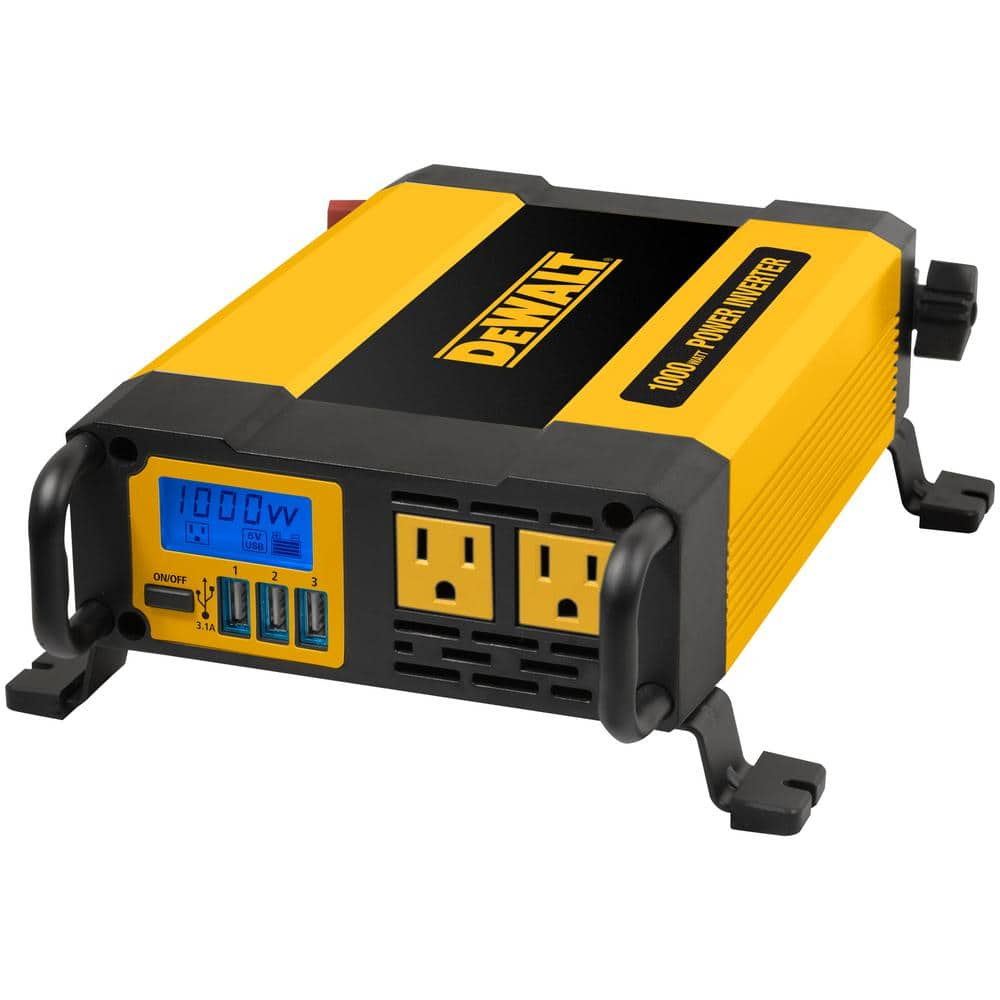
A 10,000 watt power inverter provides enough electricity to run a small home, a large RV, or a complete mobile workshop. It converts DC power from a battery bank into usable AC electricity for heavy-duty appliances like air conditioners, welders, and well pumps. Installing a system of this size requires careful planning regarding battery voltage, wire thickness, and safety fusing.
Many users underestimate the current flow in a system this large. A 10,000W load pulls massive amperage from batteries. If the voltage is too low, wires can overheat. This guide explains exactly how to set up, size, and use these heavy-duty inverters safely.
- Voltage Matters: A 48V battery bank is the standard for a 10,000W system to keep amperage safe.
- Heavy Loads: This size inverter can run central AC, electric dryers, and power tools simultaneously.
- Pure Sine Wave: Always choose a pure sine wave model for sensitive electronics and motors.
- Wire Sizing: You need thick 4/0 AWG cables or double runs to handle the current without voltage drop.
What Can a 10,000 Watt Inverter Run?
A 10,000w power inverter is a massive power source. In the world of portable and off-grid power, this is often considered the limit for a single-phase residential setup. It produces roughly 40 to 80 amps of AC current depending on your output voltage (120V or 240V).
You can run almost any standard household appliance. Here is a list of common items a 10kW unit handles easily:
- Central Air Conditioning: Most 3-4 ton units require 3,500 to 5,000 running watts.
- Electric Water Heaters: Standard tanks use 4,500 watts.
- Well Pumps: Deep well pumps (1HP to 2HP) surge high but run around 1,000 to 2,000 watts.
- Welders: MIG or TIG welders often need 6,000+ watts.
- Kitchen Appliances: Microwaves, fridges, and coffee makers can all run at the same time.
While the inverter can handle the load, the limiting factor is usually the battery capacity. You need a large battery bank to sustain these loads for more than a few minutes.

Critical: Battery Bank Voltage
When dealing with 10 000 watt power inverters, input voltage is the most important decision you will make. You will see options for 12V, 24V, and 48V. For a system of this size, 12V is dangerous and 24V is inefficient. You should use 48V.
Voltage Decision Matrix
- If using 12V: Current is ~833 Amps. NOT RECOMMENDED. Fire hazard.
- If using 24V: Current is ~416 Amps. Requires massive cabling. Hard to manage.
- If using 48V: Current is ~208 Amps. Manageable with standard 4/0 cable. BEST CHOICE.
Amperage creates heat. Trying to push 800+ amps through a wire requires copper bars or multiple thick cables. This creates resistance and heat. A 48V system reduces the amperage by four times compared to a 12V system. This makes the system safer and more efficient.
From the Shop
We once had a customer bring in a burnt-out 10kW inverter. They tried to run it off a 12V truck battery bank. To handle the load, they stacked three 1/0 cables together. The connection points got so hot during a heavy load test that the terminal plastic melted and the fuse holder warped. The inverter survived, but the wiring was destroyed. We switched them to a 48V configuration, and the system ran cool and stable.
Pure Sine Wave vs. Modified
You will see two main types of units on the market. For a system this size, you almost certainly need a 10 000 watt pure sine wave solar power inverter. This type of inverter produces clean electricity that matches the power you get from a wall outlet in a city.
Modified sine wave inverters are cheaper. They create a “blocky” wave. This is fine for simple heaters or old light bulbs. However, modern electronics, variable speed motors, and medical equipment will overheat or fail on modified sine wave power. Since a 10kW system is usually running a whole house, you will likely plug in sensitive electronics like computers, smart fridges, or washing machines. Stick to pure sine wave to avoid damaging your expensive appliances.
Wiring and Installation Safety
Installing 10 000 watt power inverters requires strict adherence to safety standards. The DC side (battery to inverter) is where most failures happen.
Wire Sizing
For a 48V system running at full load (10,000W), you are pulling roughly 210 to 220 amps after accounting for efficiency losses. You should use 4/0 AWG (0000 gauge) pure copper welding cable. Do not use copper-clad aluminum (CCA) wire; it has higher resistance and can get hot.
Fusing
You must place a catastrophic fuse on the positive cable as close to the battery terminal as possible. For a 48V system, a Class T fuse rated between 250A and 300A is standard. This fuse is designed to interrupt the massive arc flash that a large battery bank can create during a short circuit.
For detailed safety guidelines on DC wiring, refer to the Blue Sea Systems Circuit Wizard which is an industry standard for low voltage sizing.
Solar Power Integration
Most users install these units as part of a solar setup. A 10 000 watt pure sine wave solar power inverter often comes as an “All-in-One” unit. This means the box contains:
- The DC to AC Inverter.
- An AC Battery Charger (to charge from a generator or grid).
- A Solar Charge Controller (MPPT).
This integration makes installation easier. You connect your solar panels directly to the unit, and it manages charging the batteries. When choosing a unit, check the solar input voltage limit. High-voltage solar inputs (450V+) allow you to string many solar panels in a series, which simplifies wiring on your roof.
Understanding the Power Board
For the technicians and DIY repair enthusiasts, the quality of the 10 000 watt pure sine wave inverter power board determines the lifespan of the unit. This is the internal circuit board that handles the high-speed switching.
High-quality power boards use heavy copper traces and a large number of MOSFETs (metal-oxide-semiconductor field-effect transistors) to share the load. Cheaper units use fewer MOSFETs, pushing them harder and increasing the risk of failure. When looking at repair parts or replacements, ensure the power board is rated specifically for the continuous load and not just the surge (peak) load. The transformer inside must also be toroidal (doughnut-shaped) for high efficiency and low idle consumption.
You can learn more about how inverters function internally from Wikipedia’s overview on Power Inverters.
Frequently Asked Questions
Can I run a 10,000 watt inverter on a 12V battery?
Technically yes, but it is highly discouraged. It would require over 800 amps of current, which needs impractical wire sizes and creates a severe fire risk. Always use 48V for 10,000 watts.
How many batteries do I need for a 10,000 watt inverter?
This depends on how long you want to run your appliances. To run a 10,000 watt load for just one hour, you need a 10kWh battery bank. This equals roughly two server-rack style 48V 100Ah lithium batteries.
Does a 10,000W inverter use power when nothing is plugged in?
Yes. This is called “idle consumption.” Large inverters can use 50 to 100 watts just to stay on. If you are not using power, you should turn the inverter off to save your batteries.
What size fuse do I need?
For a 48V system, use a Class T fuse rated for 250A to 300A. For a 24V system (not recommended), you would need a 500A+ fuse.
Can I connect two 5,000 watt inverters instead?
Yes, this is called “parallel stacking.” It is often a good idea because if one unit fails, you still have half your power. However, the inverters must be designed specifically to be stacked.
