
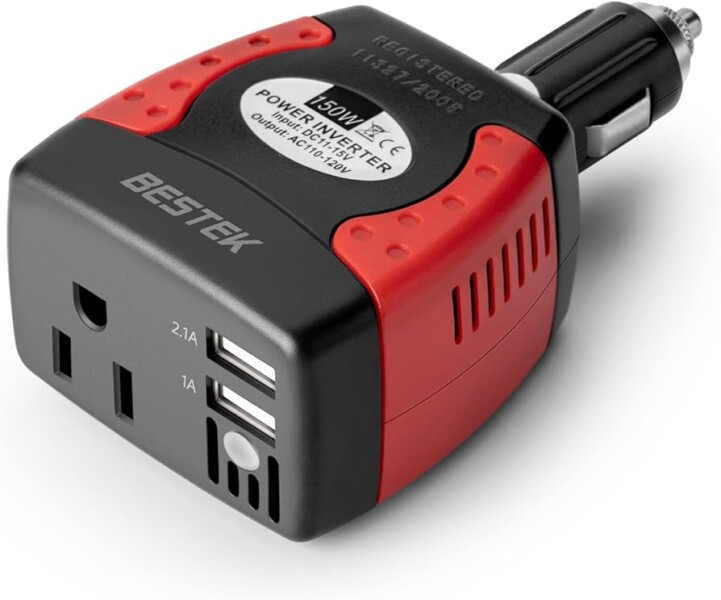
For most BESTEK power inverters, the recommended input voltage is 12V DC, and several product pages state that the unit is for DC 12V only. Some newer 300W manuals list a wider acceptable range of 11-17V DC, but standard use still means a 12V vehicle system, not 24V.
Power inverters are very useful. They convert DC (direct current) to AC (alternating current). This helps to use electrical devices in cars and trucks. Bestek is a popular brand for power inverters. To use the Bestek power inverter safely, you need to know the recommended input voltage.
Why Input Voltage Matters
Input voltage is important. It is the voltage that goes into the power inverter. If the input voltage is too high or too low, the inverter might not work. It could even get damaged. So, it is important to know the right input voltage.
Recommended Input Voltage For Bestek Power Inverter
The recommended input voltage for most Bestek power inverters is 12 volts. This is the standard voltage for car batteries. Some inverters can handle a range of voltages, but 12 volts is the best.
Understanding Voltage Range
While 12 volts is the recommended voltage, some inverters can work with voltages from 11 to 15 volts. This range allows for small fluctuations. However, it is best to keep the voltage close to 12 volts.
Recommended Voltage vs. Allowed Range vs. Protection Threshold
These three terms describe different things, and many pages treat them as one.
- Recommended input voltage: the nominal system voltage the inverter is designed for. For BESTEK, that is 12V DC.
- Allowed input range: the window in which the inverter is specified to run. One BESTEK 300W manual lists 11-17V DC for a specific model.
- Protection thresholds: the points where the inverter shuts down to protect itself. That same manual lists low-voltage protection around 10.5V ± 0.5V and over-voltage protection around 15.5V ± 0.5V.
Because the thresholds are given with a tolerance, the exact shutdown point varies from unit to unit. Treat them as a boundary to stay well inside, not a target.
Why Some Manuals Say 11-17V DC Instead of Only 12V
A “12V” vehicle system is nominal. A resting battery and a running alternator produce different readings, so a manual may state a range rather than a single number. Based on the manuals, the 11-17V figure describes the range the model is specified for, while the 12V figure on product pages describes the system it is built for. The two are not in conflict. Some manuals also mention vehicles whose accessory socket voltage can run higher than a typical 12V system, with Tesla setups cited as an example. Check the exact wording in your own model’s manual before assuming compatibility.
Model-by-Model Input Voltage Comparison
Based on the product pages and manuals, the listed models share the same 12V DC input requirement. Always confirm against the page or manual for your exact model number.
| Model | Input voltage | Output voltage | 24V supported? |
|---|---|---|---|
| 150W | DC 12V | Not separately confirmed here; check the BESTEK 150W inverter page | No, 12V only |
| 200W | 12V DC | 110V-120V | No, 12V only |
| 300W (product and comparison pages) | 12V DC | 110V-120V | No, 12V only |
| 300W (specific manual model) | 11-17V DC | Check manual | No, “12V DC vehicle systems only” |
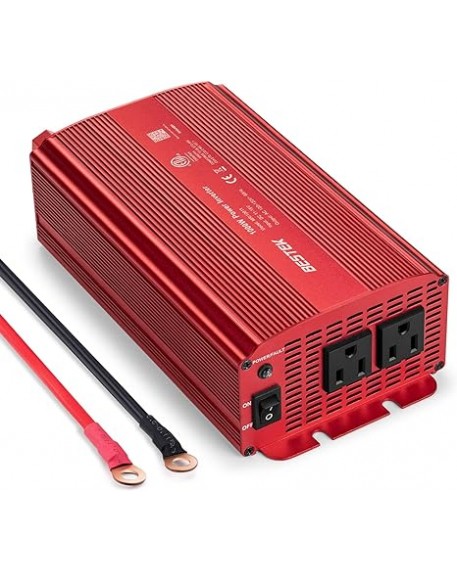
| 1000W | 12V | Check product page | No, not for 24V use |
The BESTEK 300W product page lists input and output as DC 12V, so the 300W line has more than one set of published numbers. This is why the model number matters.
Can a BESTEK Inverter Be Used in a 24V Vehicle?
No. The BESTEK 300W user manual says the inverter is designed for 12V DC vehicle systems only and should not be connected to 24V DC systems. A 24V supply is far above the over-voltage threshold of about 15.5V, so the unit is not built for it. Trucks, buses and some RVs and boats use 24V, so check before plugging in.
Input Voltage Is Not Output Voltage or Wattage
The input voltage is the DC supply from the vehicle. The output is household-style AC, listed as 110V-120V on several BESTEK pages. The wattage rating is a separate limit on how much the inverter can deliver. A 12V input does not mean 12V output, and a 300W rating does not change the input voltage requirement.
Worked Example: What 12V DC Means in a Car
Power equals voltage times current. A 120W laptop charger fed through the inverter pulls roughly 120 ÷ 12 = 10A from the 12V side, before conversion losses. At a full 300W, the same math gives about 25A, and real draw is higher because inverters are not 100% efficient. Meanwhile, the AC side carries only about 2.5A at 120V for 300W. The same power takes much more current at the low-voltage DC side, which is why cable size and fuse rating matter.
How to Check Your Car’s Battery Voltage
It is easy to check your car’s battery voltage. Here are the steps:
- Turn off the car and all lights.
- Open the hood and find the battery.
- Use a voltmeter to check the voltage. Connect the red probe to the positive terminal. Connect the black probe to the negative terminal.
- Read the voltage on the voltmeter. It should be around 12 volts.
If the voltage is between 11 and 15 volts, it is safe to use the inverter. If it is higher or lower, check the battery.
Note that the 11-15 volt guidance above is a conservative window. The 300W manual’s 11-17V range and its roughly 15.5V over-voltage point mean staying at or below 15V leaves a margin.
Why Use A Bestek Power Inverter?
Bestek power inverters are reliable. They help you use devices like laptops, phones, and small appliances. You can use them on road trips, camping, or in emergencies.
Features of Bestek Power Inverters
Bestek inverters have many good features. These include:
- Multiple AC outlets
- USB ports
- Overload protection
- Cooling fans
- Compact design
These features make Bestek inverters easy and safe to use.
Credit: www.bestekdirect.com

Credit: www.amazon.com
Using the Bestek Power Inverter Safely
Safety is very important. Here are some tips to use the Bestek power inverter safely:
Read The Manual
Always read the manual before using the inverter. The manual will have important information about the input voltage and other safety tips.
Do Not Overload The Inverter
Each inverter has a maximum power limit. Do not connect devices that use more power than the inverter can handle. This can cause the inverter to overheat or get damaged.
Keep The Inverter Cool
Power inverters can get hot. Make sure there is enough space around the inverter for air to flow. Do not cover the inverter with anything.
Check The Battery Voltage
Before using the inverter, check the battery voltage. Make sure it is within the safe range (11 to 15 volts).
Use The Right Cables
Use the cables that come with the inverter. If you need to use different cables, make sure they are the right size and type.
Cigarette-Lighter Socket vs. Direct Battery Connection
A vehicle socket is convenient but is typically protected by a fuse in the range of 10-15A on many vehicles (check your fuse box and owner’s manual). From the example above, that supports roughly 120-180W at 12V before losses. Higher loads can blow the socket fuse even though the inverter itself is rated higher. For full output on a larger unit, use a direct battery connection only if your model is supplied with battery cables or clamps, and follow the manual for connection order and fusing. Running the engine during heavy use also keeps battery voltage up and avoids low-voltage shutdown.
What Happens If Input Voltage Is Too Low or Too High?
Quick Troubleshooting
- Shuts off or alarms under load (low voltage): battery or socket voltage has dropped toward the roughly 10.5V ± 0.5V threshold. Start the engine, reduce the load, check the battery and make sure the plug is fully seated.
- Shuts off with the engine running (over-voltage): input has reached about 15.5V ± 0.5V. Measure the voltage at the socket; if it is high, have the charging system checked.
- Does not power on at all: check the socket fuse, the inverter’s own fuse if it has one, and that the vehicle is 12V and not 24V.
Protection circuits reduce the risk, but they are a last line of defense. Repeated shutdowns are a sign to fix the cause, not to keep restarting.
Quick Compatibility Checklist Before Plugging In
- Confirm the vehicle’s electrical system is 12V, not 24V.
- Find the exact model number on the inverter label and match it to its manual.
- Note the input range and protection points listed for that model.
- Add up the wattage of what you plan to connect and stay under the inverter’s rating.
- Check that your socket fuse can carry the expected current.
- Measure the battery voltage and confirm it is within range.
What to Verify Before Buying
- The input voltage line on the product page and in the manual, since they may differ in format (12V vs. 11-17V).
- A statement about 24V use; the 300W and 1000W sources say not to.
- The AC output voltage and continuous wattage.
- Whether battery cables are included, if you need more than socket power.
- The BESTEK 300W pure sine wave inverter manual, if you are comparing that model, for its specific voltage notes.
FAQ
Is the BESTEK inverter for 12V cars only?
The sources reviewed describe 12V DC vehicle systems. Stick to those unless your model’s manual says otherwise.
Do all BESTEK inverter models have the same input voltage?
The listed models share a 12V DC input, but some manuals give a wider range and different protection points, so check your model.
Is 17V safe because the manual lists 11-17V?
That range is the specified input window, but the same manual lists over-voltage protection around 15.5V ± 0.5V. Do not aim for the top of the range.
Conclusion
The recommended input voltage for the Bestek power inverter is 12 volts. This is the standard voltage for car batteries. It is important to keep the voltage within the safe range (11 to 15 volts). This will help to use the inverter safely and effectively.
Remember to read the manual, do not overload the inverter, keep it cool, check the battery voltage, and use the right cables. By following these tips, you can enjoy the benefits of the Bestek power inverter safely.
Thank you for reading this article. We hope it helps you understand the recommended input voltage for the Bestek power inverter. Stay safe and enjoy using your power inverter!