
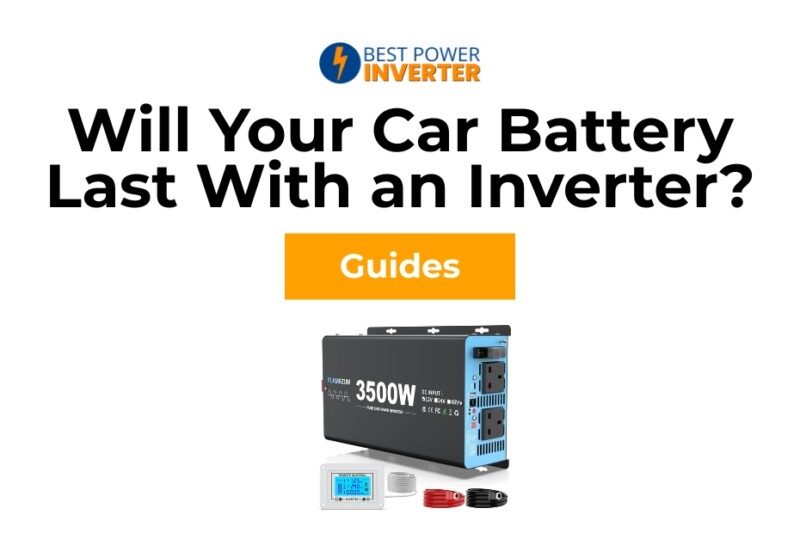
Have you ever wondered how long your car battery can power your devices when connected to an inverter? Whether you’re charging your laptop on a road trip or running small appliances during a camping adventure, knowing your battery’s limits is crucial.
If you push it too far, you might end up stranded with a dead battery. But how do you figure out exactly how long your battery will last? You’ll discover the key factors that affect your car battery’s runtime with an inverter, practical examples, and smart tips to make your power last longer.
Read on to make sure you never run out of juice when you need it most.
Battery Capacity And Runtime
Understanding battery capacity and runtime is essential for estimating how long your car battery can power an inverter.
Battery capacity defines the total energy stored, while runtime depends on the energy consumption of connected devices. The balance between these factors affects how long your battery lasts before needing a recharge.
Amp-hours And Watt-hours Impact
Amp-hours (Ah) measure the amount of electric charge a battery can deliver over one hour. A higher Ah rating means the battery stores more energy and can supply power longer. Watt-hours (Wh) represent the total energy available, calculated by multiplying volts by amp-hours.
For example, a 12-volt battery with 50 Ah capacity has 600 Wh of energy (12 V × 50 Ah). If your inverter and devices use 100 watts, the battery could last about 6 hours (600 Wh ÷ 100 W). But real runtime is less due to inefficiencies and battery health.
Battery Type Differences
Standard car batteries are designed to provide quick bursts of high current to start the engine. They are not built for deep discharges or long-term power supply. Using them with an inverter drains them fast and reduces battery life.
Deep-cycle batteries, like those for RVs or marine use, store energy for longer periods. They can safely provide power over extended times without damage. For powering an inverter, deep-cycle batteries offer better runtime and durability than starter batteries.
Power Draw And Device Usage
Understanding how power draw and device usage affect your car battery’s runtime with an inverter is crucial. The amount of power your devices consume directly impacts how long the battery lasts.
Different devices use varying wattage, which either drains or preserves battery life. Even devices on standby can slowly reduce your battery’s charge. Knowing these factors helps you manage battery life better.
High Vs Low Wattage Devices
High wattage devices use more power. Examples include microwaves, hair dryers, and power tools. These devices drain the battery quickly, often within minutes or a few hours. Low wattage devices use less power. Laptops, LED lights, and phone chargers fall into this group. They allow the battery to last longer. Choosing low wattage devices extends your battery runtime significantly.
Standby Power Consumption
Devices consume power even when not fully on. This is called standby power or vampire power. Small electronics like TVs and routers use standby power constantly.
Over time, this reduces battery life without obvious use. Turning off devices completely or unplugging them saves battery power. Monitoring standby consumption helps prevent unexpected battery drain.
Inverter Efficiency And Features
An inverter converts DC power from a car battery into usable AC power. Its efficiency and features affect how long the battery lasts. Efficiency means how well the inverter changes power without losing too much energy. Features like safety cutoffs protect the battery from damage. Understanding these details helps you get the most from your battery and inverter.
Efficiency Ratings
Inverter efficiency shows the percentage of power converted successfully. Most inverters have efficiency between 80% and 95%. Higher efficiency means less energy loss and longer battery life. For example, a 90% efficient inverter uses less battery power than one at 80%. Choosing a high-efficiency inverter saves battery energy and extends runtime.
Low Voltage Disconnects
Low voltage disconnects stop the inverter when the battery voltage is too low. This feature prevents deep battery discharge, which can damage the battery. It also helps keep enough charge for starting the car engine. When voltage drops to a set level, the inverter shuts off automatically. This safety feature protects your battery and improves its lifespan.
Read More: What Will a 100 Watt Power Inverter Run?
Depth Of Discharge Effects
Depth of discharge (DoD) plays a key role in car battery life with an inverter. It measures how much battery power is used before recharging. Higher DoD means more battery capacity is drained each time.
Using too much of the battery’s capacity regularly shortens its lifespan. A shallow DoD keeps the battery healthier and lasts longer. This balance affects how long your battery can power devices through the inverter.
What Is Depth Of Discharge?
Depth of discharge shows the percentage of battery energy used. For example, a 50% DoD means half the battery power is consumed. The rest remains for future use. Lower DoD is easier on the battery.
Impact Of Deep Discharge On Battery Life
Deep discharge stresses the battery’s internal components. It causes chemical changes that reduce battery capacity over time. Frequent deep discharges can lead to early battery failure. Keeping DoD low protects the battery from damage.
Recommended Depth Of Discharge For Car Batteries
Standard car batteries are not made for deep discharge. They perform best with DoD below 20%. Deep-cycle batteries handle higher DoD, around 50% or more. Choosing the right battery type helps manage DoD effectively.
How Depth Of Discharge Affects Inverter Runtime
Higher DoD means longer runtime for each use. But it reduces total battery lifespan. Lower DoD shortens runtime but extends battery life. Balancing runtime and battery health improves overall performance.
Tips To Manage Depth Of Discharge
Use a deep-cycle battery for inverter applications. Avoid running the battery down completely. Monitor battery voltage regularly to prevent excessive discharge. Recharge the battery as soon as possible after use.
Common Usage Scenarios
Understanding how long your car battery lasts with an inverter depends on how you use it. Different devices draw different amounts of power, affecting battery life.
The way you use the inverter can range from short bursts to hours of continuous operation. Below are examples of common usage scenarios that show how usage impacts battery runtime.
Short-term Use Examples
Short-term use usually involves low-power devices for a few minutes to an hour. Charging a phone or running a small fan falls into this category.
These activities use less energy and put minimal strain on the battery. You can expect your car battery to last several hours in such cases. Turning the inverter on only when needed helps preserve battery life.
Extended Use Examples
Extended use means running devices for many hours or powering high-wattage equipment. Examples include laptops, small TVs, or LED lights during camping.
Using power-hungry appliances like microwaves or hair dryers drains the battery very fast. In these cases, a standard car battery may only last one to two hours. For longer use, a deep-cycle battery or extra batteries improve runtime and protect your car’s starter battery.
Preventing Battery Drain
Preventing battery drain is key to extending your car battery’s life while using an inverter. Many factors cause the battery to lose power quickly. Taking simple steps helps keep your battery charged longer. These steps also avoid sudden power loss and battery damage. Here are some effective ways to prevent battery drain.
Running The Engine
Keeping the engine running charges the battery continuously. The alternator supplies power and prevents deep discharge. Running the inverter with the engine off drains the battery fast. Avoid using high-power devices when the engine is off. This practice extends battery life and keeps devices powered.
Using Deep-cycle Batteries
Standard car batteries are not designed for long power draws. Deep-cycle batteries handle repeated discharges better. They provide steady power for hours without damage. Using a deep-cycle battery with your inverter is safer. It reduces the risk of battery failure and improves runtime.
Voltage Monitoring
Check battery voltage regularly to avoid over-discharge. A voltmeter or inverter with low-voltage cutoff helps. It shuts off power before the battery gets too low. This protects the battery’s health and prevents damage. Monitoring voltage ensures reliable inverter performance.
Matching Wattage To Capacity
Choose devices that match your battery’s power capacity. High-wattage devices drain the battery quickly. Smaller loads use less energy and last longer. Calculate the total wattage and compare it to your battery’s rating. Proper matching avoids unexpected shutdowns and extends battery life.
Connecting Inverters Safely
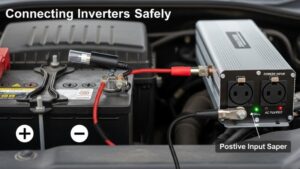
Connecting an inverter to your car battery requires care and attention. A safe connection prevents damage to the battery and the inverter. It also protects you from electrical hazards. Follow simple steps to ensure a secure and efficient setup.
Choose The Right Inverter Size
Select an inverter that matches your power needs. An inverter too large for the battery can cause quick drain. One too small may not power your devices properly. Check the wattage of your devices before buying an inverter.
Use Proper Cables And Connectors
Use thick cables designed for high current. Thin cables heat up and reduce power flow. Ensure connectors fit tightly on battery terminals. Loose connections cause sparks and voltage drops.
Connect Directly To Battery Terminals
Attach inverter cables directly to the car battery terminals. Avoid connecting through cigarette lighter sockets. These sockets often can’t handle high power loads. Direct connection ensures stable power supply.
Install A Fuse For Safety
Place a fuse close to the battery on the positive cable. The fuse protects against short circuits and overloads. Choose a fuse rating slightly higher than the inverter’s maximum current. This prevents damage and fire risks.
Keep Battery And Inverter Dry And Ventilated
Place the inverter in a dry, cool spot inside the car. Avoid areas where water or dust can enter. Ensure good airflow around the inverter to prevent overheating. Overheating can shorten inverter life.
Turn Off The Inverter When Not In Use
Switch off the inverter after use to avoid battery drain. Leaving it on with the engine off can quickly discharge the battery. Protect your car battery by monitoring inverter usage time.
Conclusion
Car battery life with an inverter varies widely. It depends on battery size, device power use, and battery type. Standard car batteries drain quickly if used with high-watt devices. Deep-cycle batteries last longer for continuous use. Always monitor battery voltage to avoid full discharge.
Using an inverter while the engine is off risks running the battery flat. Keep loads low and avoid leaving the inverter on when not needed. Careful use helps extend battery life and prevents unexpected power loss. Understanding these factors ensures better performance and longer runtime.