
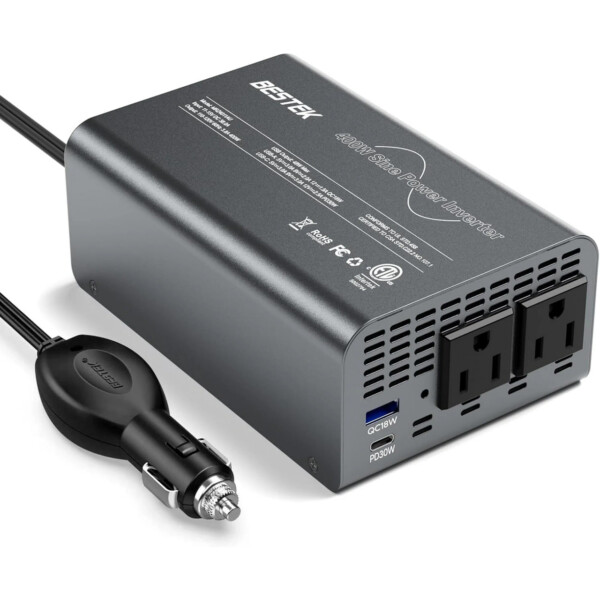
A BESTEK 300W inverter (300 watts continuous, 700 watts peak) can run a small fan but not a microwave. Whether a 500W model can handle modest loads depends on whether the appliance stays under its continuous rating. Microwaves usually draw 700W to 1,250W, which is more than most BESTEK car inverters supply.
Many people wonder if the Bestek Inverter can power small appliances. This is a very common question. In this article, we will explore the answer.
What is a Bestek Inverter?
The Bestek Inverter converts DC power to AC power. This is useful in cars, boats, and RVs. It helps power devices that need AC power.
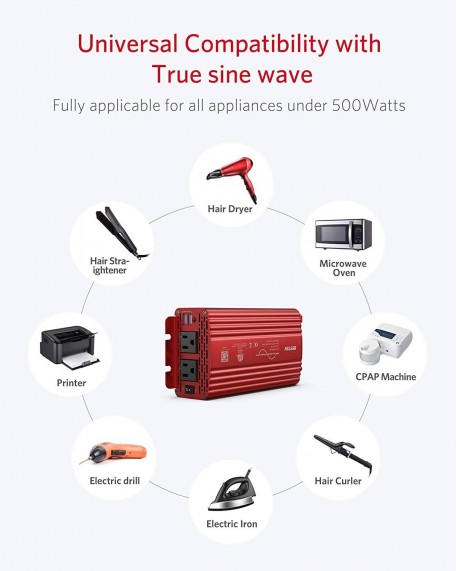
Credit: www.bestekdirect.com
Types of Bestek Inverters
Bestek offers many types of inverters. The most common types are:
- 300W Power Inverter
- 500W Power Inverter
- 1000W Power Inverter
What are Small Appliances?
Small appliances are devices that do not use much power. Examples include:
- Fans
- Microwaves
- Blenders
- Toasters
Power draw varies a lot within this group. A fan is a light load, while microwaves and toasters are heavy ones, so they need separate treatment below.
Can the Bestek Inverter Power a Fan?
Yes, the Bestek Inverter can power a fan. Most fans use around 50 to 100 watts. Even a small 300W Bestek Inverter can handle this.

Credit: www.amazon.com
Which BESTEK inverter models can run a small fan?
Any of the 300W, 500W or 1000W models can run a typical 50 to 100 watt fan. The 300W model’s 700-watt peak rating also covers the brief extra draw when a fan motor starts. Fan motors can pull more power for a moment at startup than while running, so compare the label wattage with the continuous rating and leave some margin.
Can the Bestek Inverter Power a Microwave?
It depends on the microwave. Microwaves use a lot of power. Some microwaves use around 700 watts. Others can use up to 1500 watts.
If you have a small microwave, a 1000W Bestek Inverter might work. For larger microwaves, you need more power. A 1500W or 2000W inverter is better.
Can a BESTEK 300W inverter power a microwave?
No. BESTEK’s 300W manual states the inverter is not suitable for high-power appliances such as microwave ovens. The BESTEK 300W Pure Sine Wave Power Inverter manual covers this. A 500W model is also too small, since its 500 watts is the total rated output.
What wattage do typical microwaves use?
According to the Consumer Reports microwave buying guide, compact microwaves are commonly around 700 watts, midsized ones 800 to 1,250 watts, and large ones 1,000 to 1,250 watts. Every microwave in its tests has a minimum of 700 watts.
Worked example: microwave versus inverter
Take a compact 700W microwave:
- On a 300W inverter, 700W is about 2.3 times the continuous rating. The 700W peak rating only covers short surges, so the inverter will shut down.
- On a 500W inverter, the load is 200W over the continuous rating.
- On a 1000W inverter, 700W fits. A 1,250W midsized microwave does not.
A microwave’s label may also list an input rating higher than its cooking wattage, so use the larger number. At 12V, a 1000W load pulls roughly 83A from the battery before conversion losses, which needs thick cables and direct battery connection.
Things to Consider
Before using the Bestek Inverter, you need to consider a few things. This is important to avoid problems.
Power Requirements
Check the power requirements of your appliance. This is usually written on the device. Make sure your inverter can handle it.
If the label lists only amps, multiply by the supply voltage. A 1A fan on 120V AC is about 120 watts.
Battery Capacity
Your car or RV battery must have enough power. If the battery is weak, the inverter will not work well.
Continuous And Peak Power
Inverters have continuous and peak power ratings. Continuous power is the amount of power it can supply all the time. Peak power is the maximum power it can supply for a short time.
Make sure your appliance does not exceed these limits.
Use this rule: if the appliance’s running watts are under the continuous rating and its startup surge is under the peak rating, it should run. A fan passes. A microwave fails on continuous watts, so a high peak rating cannot save it.
Safety Features
Bestek Inverters have safety features. These include overload protection and short circuit protection. Always check these features before use.
Can a car cigarette-lighter socket support the inverter’s full output?
Often not. BESTEK notes that many lighter plugs are fused at 10A or 15A, which limits output to about 120W or 180W on a 12V system. A fan fits within that. A 300W or larger load may blow the plug fuse unless the inverter is clamped directly to the battery. A 12V socket may not support the full rating of a higher-watt inverter.
Which Appliances Fit Which Inverter?
This chart uses typical wattages and the continuous rating. Check your own label.
| Appliance (typical draw) | 300W | 400W | 500W |
|---|---|---|---|
| Phone or laptop charger (under 100W) | Yes | Yes | Yes |
| Small fan (50 to 100W) | Yes | Yes | Yes |
| Several small loads together (about 250 to 450W total) | Only up to 300W total | Only up to 400W total | Only up to 500W total |
| Compact microwave (700W+) | No | No | No |
| Toaster or coffee machine | No | No | No |
BESTEK’s 200W guidance also warns against loads over 200W, such as a coffee machine or toaster, on that unit.
Checklist Before You Plug In
- Read the appliance label for watts, or multiply volts by amps.
- Compare that number with the inverter’s continuous rating, not its peak rating.
- Check the socket fuse (10A or 15A) and the 12V limit it creates.
- For loads above that limit, use direct battery cables.
- Add up everything running at once.
Why a Fan Starts but a Microwave Trips the Inverter
A fan draws well under the continuous rating, so even its startup surge stays inside the limit. A microwave draws more than a 300W or 500W unit can deliver continuously. Common overload signs are:
- An alarm sound or warning light
- The inverter shutting off after a few seconds
- A blown plug fuse
- A dimming or dying battery voltage
Unplug the load and restart the inverter. If it trips again with the same appliance, the appliance is too large.
Is Pure Sine Wave Better for Motors or Kitchen Appliances?
Pure sine wave output suits motors such as fans, which tend to run quieter and cooler on it. It does not add wattage, though. A pure sine wave 300W inverter still cannot run a microwave.
When You Need a Larger Inverter
Choose an inverter with a continuous rating above your appliance’s wattage, and a heavy-draw appliance like a microwave needs roughly 1,500W or more. At that size, plan for direct battery connection, heavy cables and a healthy battery.
Conclusion
Yes, the Bestek Inverter can be used for small appliances. It works well with fans. For microwaves, check the power requirements. Choose the right inverter based on your needs.
Always consider the power requirements, battery capacity, and safety features. This ensures safe and effective use of your Bestek Inverter.
FAQs
| Question | Answer |
|---|---|
| Can a 300W Bestek Inverter power a fan? | Yes, most fans use less than 100 watts. |
| Can a 1000W Bestek Inverter power a microwave? | It depends on the microwave’s power requirements. |
| What safety features do Bestek Inverters have? | They have overload and short circuit protection. |
| What happens if I overload a BESTEK inverter? | It will usually sound an alarm or shut down to protect itself. Reduce the load and restart. |
| Does a 500W model’s peak rating let it run a 700W microwave? | No. The BESTEK 500W manual describes 500 watts as the total rated output, so a 700W load exceeds it. |