
A 10kW solar power system generates enough electricity to cover the needs of a large family home or a house with high energy demands like a pool or electric vehicle. When you pair an array of this size with microinverters, you change how the system handles energy production. Instead of treating the whole array as one big unit, microinverters manage every panel individually. This setup costs more upfront but often pays for itself through higher efficiency and safer operation.
Many homeowners struggle to decide between standard string inverters and microinverters for large systems. A 10kW system usually requires 25 to 30 solar panels. Fitting that many panels on a single roof plane is difficult. You often have to split them across different sides of the roof. This is where the specific technology of a 10 kw solar power system with micro inverter becomes essential.
This guide breaks down the costs, daily power output, and installation realities of using microinverters on a 10kW system.
- Higher Efficiency: Microinverters allow a 10kW system to produce maximum power even if some panels are shaded or facing different directions.
- System Size: A 10kW array typically uses 25 to 30 panels (assuming 400W per panel), requiring significant roof space.
- Safety: Microinverters convert DC to AC at the panel, keeping high-voltage DC electricity off your roof.
- Cost Factor: Expect to pay 10-20% more for microinverters compared to a string inverter setup.
Understanding the 10kW Microinverter Setup
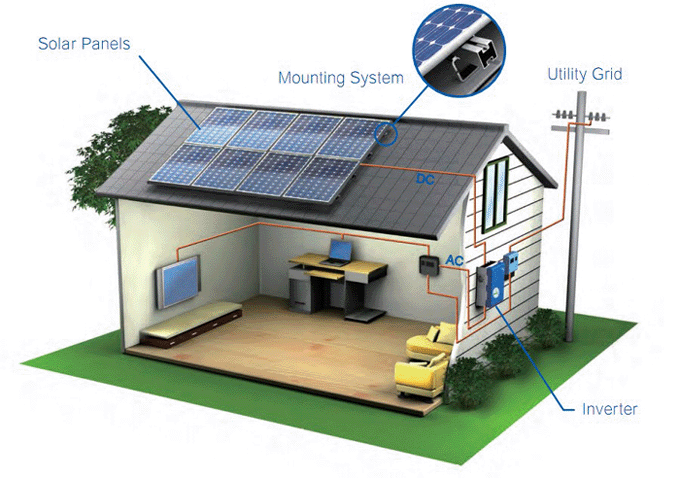
A 10kW solar system is a substantial residential power plant. To reach 10 kilowatts (10,000 watts), you combine roughly 25 to 30 solar panels, depending on the wattage of each panel. In a standard setup, all these panels connect to a single box on the wall called a string inverter.
A 10 kw solar power system with micro inverter works differently. There is no big box on the side of the house. Instead, a small device is attached to the back of each solar panel. If you have 28 panels, you have 28 microinverters.
This decentralized approach solves the “Christmas light effect.” With old string inverters, if one panel gets covered by leaves or shade, the performance of the whole string drops. With microinverters, if one panel is shaded, the other 29 panels keep running at 100% capacity. For a large system spread across a complex roof, this independence is vital.
Cost Analysis: Microinverters vs. String
Price is the biggest hurdle for most buyers. Microinverters are more complex hardware. You are buying 30 small computers instead of one big one. That drives up the price.
As of current market rates, a turnkey 10kW system with microinverters typically costs between $25,000 and $35,000 before incentives. This equates to roughly $2.50 to $3.50 per watt.
Where the Money Goes
If you chose a string inverter for the same 10kW array, you might save $2,000 to $4,000 upfront. However, the calculation isn’t that simple. You must look at the Levelized Cost of Energy (LCOE). This term refers to the cost of the system divided by the total energy it produces over 25 years.
Because microinverters often harvest 5% to 15% more energy annually (especially on shaded roofs), the extra upfront cost usually pays for itself within the first 5 to 7 years. After that, the extra production is pure profit.
Daily Power Output Expectations
What does a 10kW system actually produce? The rating “10kW” is the maximum potential power under perfect lab conditions. Real life is different.
On average, a 10kW system in the United States produces between 35 and 55 kWh (kilowatt-hours) per day. This variance depends heavily on your location (sun hours) and the efficiency of your inverters.
Why Microinverters Produce More
Microinverters start producing power earlier in the morning and stop later in the evening compared to string inverters. This is because they require a lower voltage to “wake up.” Even in low light, a microinverter can squeeze power out of a panel.
According to the Department of Energy, system losses are inevitable, but component choice minimizes them. Microinverters reduce mismatch losses. Solar panels degrade at different rates. In year 10, one panel might be 90% efficient while another is 92%. A microinverter treats them separately, getting the best from both. A string inverter would drag the better panel down to the level of the weaker one.
Installation and Roof Layout
Installing 30 panels is a construction project. A 10kW array requires about 500 to 600 square feet of clear roof space. Very few homes have a single, south-facing roof section this large. This is the main reason installers recommend a 10 kw solar power system with micro inverter.
With microinverters, you can split the array:
- 12 panels on the South roof (maximum sun).
- 8 panels on the West roof (late afternoon power).
- 10 panels on the East roof (morning power).
This “split pitch” layout provides a steady curve of power throughout the entire day, rather than a massive spike at noon. This is easier on your home’s electrical panel and better for self-consumption.
From the Shop
We recently inspected a 10kW system in Ohio installed by a budget company. They used a string inverter on a complicated roof with dormers (pop-out windows). The owner complained that production dropped to near zero every day at 2 PM.
We found that the shadow from a single chimney was hitting just two panels in the middle of the string. Because it was a string inverter, that shadow acted like a kink in a hose. It blocked the flow for the whole array. We retrofitted the system with microinverters. The customer’s production jumped 40% immediately. The shaded panels still produced nothing, but the other 28 panels roared back to life.
Decision Matrix: Is This Right For You?
Not everyone needs microinverters. If you have a perfect roof and a tight budget, they might be overkill. Use this matrix to decide.
Which Inverter Should You Choose?
- Scenario A: Complex Roof (Multiple angles/directions) → Microinverters (Mandatory). String inverters cannot handle multiple orientations efficiently without expensive add-ons.
- Scenario B: Shading Issues (Trees, chimneys, neighbors) → Microinverters. They isolate the shade to the affected panels only.
- Scenario C: Future Expansion → Microinverters. You can easily add 2 or 3 panels later. String inverters have strict size limits.
- Scenario D: Perfect South Roof, Zero Shade, Budget Priority → String Inverter. You will save money and get similar performance.
Monitoring Capabilities
Another benefit of the 10 kw solar power system with micro inverter is data. Systems like Enphase or APsystems provide an app that shows the power of every single panel. You can see if a baseball hit a panel or if a bird built a nest under one. With a string inverter, you only see the total system output. You won’t know a single panel is broken until the whole bill goes up.
Frequently Asked Questions
How much roof space do I need for a 10kW system?
You need approximately 500 to 600 square feet of usable roof space. This assumes you are using modern panels rated between 375W and 425W. If you use older, lower-wattage panels, you will need even more space.
Can I install a 10kW system myself?
While DIY solar is possible, a 10kW system is large and dangerous. It involves high-voltage grid connections and significant structural weight on your roof. Most jurisdictions require a licensed electrician to sign off on the final connection. For more on safety standards, refer to the National Renewable Energy Laboratory (NREL) guidelines.
Do microinverters last as long as panels?
Modern microinverters are built to last 25 years, matching the lifespan of solar panels. This is a major improvement over older tech. They are sealed units designed to withstand extreme heat and freezing cold on the roof.
Is a 10kW system enough to run a whole house?
For the average US home, a 10kW system is more than enough and may even produce a surplus to sell back to the grid. However, if you have electric heating, a heated pool, and two electric cars, you might consume all the power it generates.
What happens to the microinverters if the grid goes down?
For safety reasons, all grid-tied inverters (micro or string) automatically shut off during a blackout. This prevents electricity from flowing back into the power lines and injuring utility workers. To have power during an outage, you must add a battery backup system.