
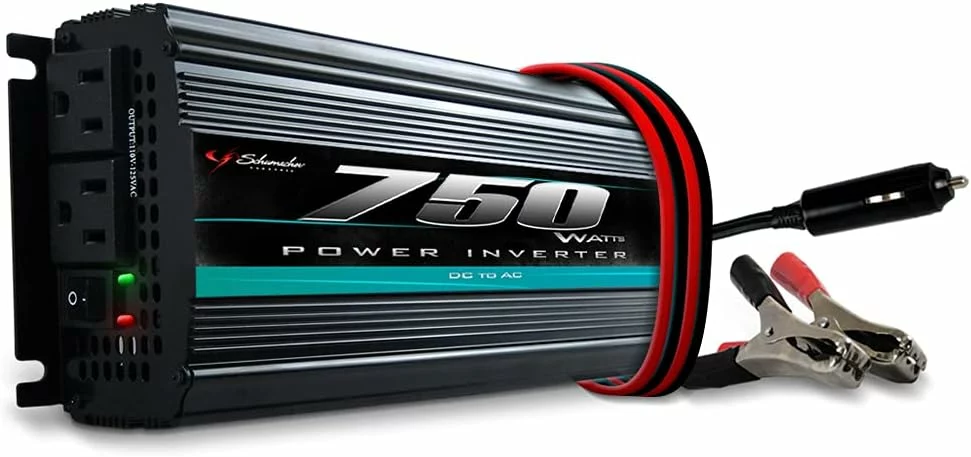
A 10kW power inverter is a serious piece of equipment capable of running an entire average-sized home. Unlike smaller units used for camping, this size inverter handles heavy loads like central air conditioners, electric dryers, and well pumps. Choosing the right 10kW system requires careful planning regarding battery voltage, wire sizing, and output type.
- Voltage Matters: A 10kW system should almost always use a 48V battery bank to keep amperage manageable.
- Split Phase Output: Most 10kW inverters offer 120/240V split phase output to run heavy appliances.
- Battery Sizing: You need a massive battery bank (minimum 400Ah at 48V) to sustain this power level.
- Wire Gauge: Heavy gauge wiring (4/0 AWG or larger) is mandatory to prevent fire hazards.
What is a 10kW Power Inverter?
A 10kW power inverter converts DC electricity stored in batteries into AC electricity usable by household appliances. The rating “10kW” stands for 10,000 watts of continuous power output. This is distinct from surge power, which is the temporary boost an inverter gives to start electric motors.
Most 10kW units have a surge rating of 20,000 watts or higher for a few seconds. This high capacity moves the unit out of the “mobile” category and into the “stationary” or “whole-home” category. These units are heavy. They produce significant heat. They require professional-grade installation.
What Can You Run on 10,000 Watts?
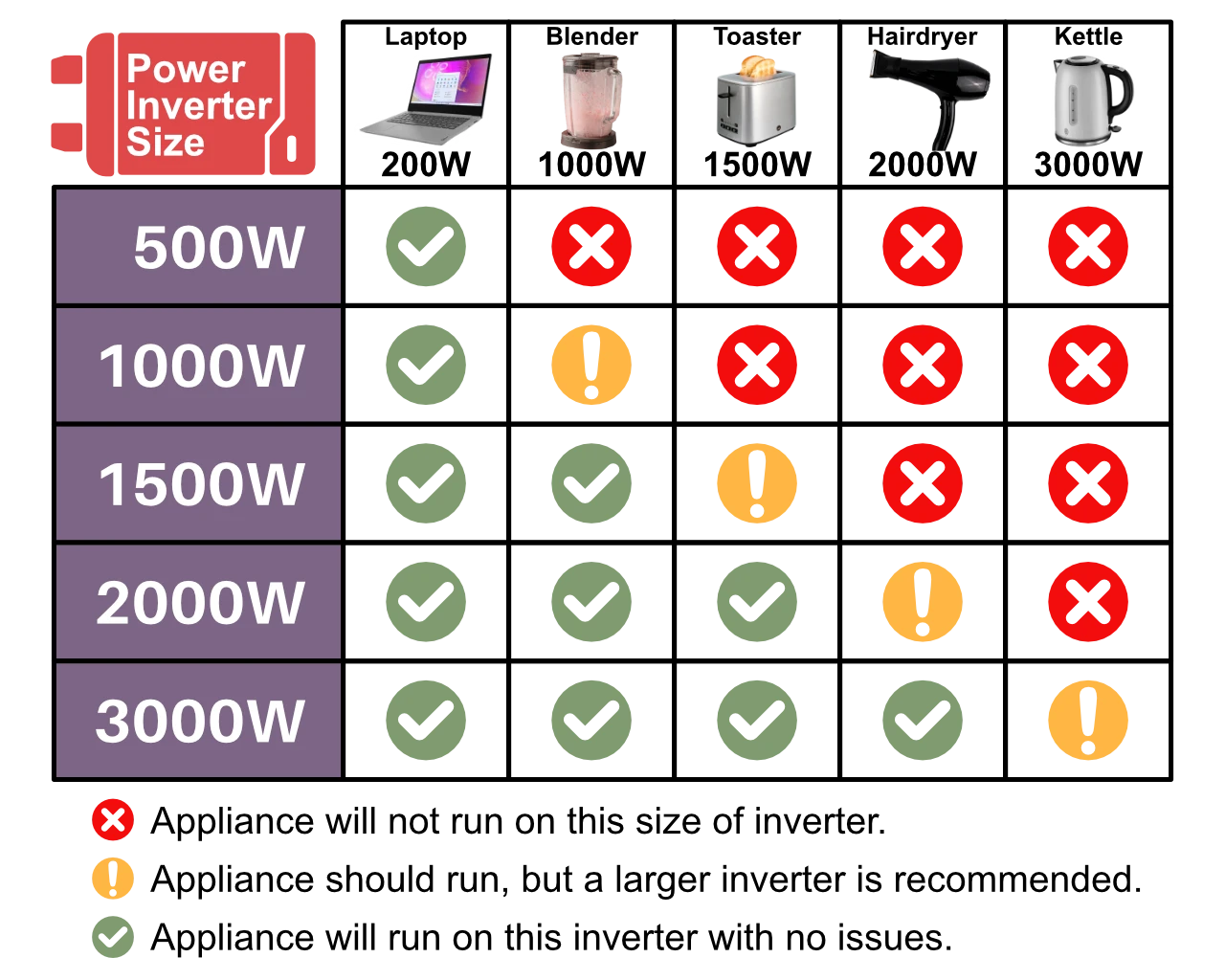
10,000 watts is a lot of power. For most off-grid homes or backup systems, this covers every standard appliance running simultaneously. You do not need to pick and choose which lights to turn on. You can live normally.
Here is a list of what a 10kW power inverter can handle at the same time:
- Central Air Conditioner (3-4 ton unit): ~3,500 watts
- Electric Water Heater: ~4,000 watts
- Refrigerator: ~200 watts
- Deep Freezer: ~150 watts
- Lights (LED): ~100 watts total
- TV and Computer: ~300 watts
- Well Pump (1 HP): ~1,000 watts
Even with all these items on, you are sitting around 9,250 watts. This is within the continuous limit of the inverter. However, if you add an electric stove or a clothes dryer to this mix, you will exceed the limit. You must manage your heaviest loads.
Critical Battery Bank Requirements
The biggest mistake people make with a 10kW power inverter is under-sizing the battery bank. An inverter is like a wide pipe; it allows a lot of water to flow. But you need a big tank to feed that pipe.
To run a 10kW load, your batteries must deliver massive amounts of current. If you use Lead-Acid or AGM batteries, you should only discharge them to 50%. If you use Lithium (LiFePO4), you can go down to 20% or lower.
Battery Sizing Decision Matrix
- If running 10kW for 1 hour: You need ~12kWh of battery storage.
- If running 10kW for 4 hours: You need ~45kWh of battery storage.
- If running typical home loads (avg 2kW) for 24 hours: You need ~48kWh of battery storage.
For a reliable off-grid setup using a 10kW inverter, a 48V 600Ah battery bank is a common starting point. This provides roughly 28kWh of stored energy.
Why 48V is the Standard
You generally cannot find a 10kW inverter in 12V. Even 24V is rare and not recommended. The industry standard for this power level is 48V (or sometimes 96V in industrial settings).
The reason is simple: Amperage.
Watts = Volts × Amps.
If you try to pull 10,000 watts from a 12V battery, the math looks like this:
10,000W / 12V = 833 Amps.
833 Amps is dangerous. It requires cables as thick as your wrist to prevent melting. It creates massive heat and efficiency loss.
Now, look at a 48V system:
10,000W / 48V = 208 Amps.
208 Amps is high, but manageable with standard 4/0 AWG welding cable. This is why 48V is the only logical choice for a 10kW system. It runs cooler, is more efficient, and the wiring is cheaper.
From the Shop
We once had a customer try to link four 2500W inverters together on a 12V battery bank to create a “10kW system.” They used standard car battery cables. When they turned on a heavy load, the resistance was so high that the cables acted like heating elements. The insulation melted off in seconds. We had to rebuild their entire system using a 48V architecture. High wattage requires high voltage to keep the amps down.
Understanding Split Phase (120V/240V)
In the United States, standard wall outlets are 120V. However, large appliances like dryers, ovens, and well pumps often require 240V. Your home’s breaker panel is likely “split phase,” meaning it brings in two 120V lines to create 240V.
Many cheap inverters only output 120V. A 10kW inverter that only outputs 120V is often useless for a whole home because it cannot power your well pump or water heater.
You need a Split Phase 10kW Power Inverter. This unit has a terminal block that outputs Line 1 (120V), Line 2 (120V), and Neutral. Between Line 1 and Line 2, you get 240V. This allows you to wire the inverter directly into your home’s main breaker panel (using a transfer switch) to power every circuit in the house.
Installation and Wire Sizing
Installing a 10kW unit is electrical work. If you are not comfortable with high-current electricity, hire a professional. The DC side (battery to inverter) is the most critical part to get right.
Wire Gauge
For a 48V system pushing 10kW, you are dealing with roughly 200 to 220 amps continuously. You should use 4/0 AWG (0000 gauge) pure copper cable. Do not use copper-clad aluminum (CCA); it cannot handle the heat. You can check specific ampacity ratings via the National Electrical Code (NEC) standards.
Fusing
You must install a fuse or breaker between the battery and the inverter. For a 10kW 48V inverter, a 250A or 300A Class T fuse is recommended. Class T fuses have a fast blow speed, which is essential for protecting against catastrophic shorts in lithium batteries.
Ventilation
A 10kW inverter generates heat. It has internal fans that will run loudly when under load. Install the unit in a cool, dry location with plenty of airflow. Do not mount it inside a sealed box, or it will overheat and shut down.
For more on managing energy efficiency in home systems, refer to the Department of Energy’s guide on renewable energy systems.
Frequently Asked Questions
Can a 10kW inverter run a whole house?
Yes, a 10kW inverter can run an average-sized home, including lights, refrigerators, and television. It can also handle heavy loads like a central AC or water heater, provided you don’t run every heavy appliance at the exact same moment.
How many batteries do I need for a 10kW inverter?
This depends on how long you want to run your appliances. At a minimum, for a 48V system, you should have a 400Ah battery bank (approx 20kWh). This ensures the batteries can supply the high current required without voltage drop.
What size wire for a 10kW inverter?
For a 48V 10kW inverter, you should use 4/0 AWG pure copper cable. If the run is longer than 10 feet, you may need even thicker cable or double runs to prevent voltage drop.
Do I need a 48V battery for a 10kW inverter?
Yes. While 24V versions exist, they are inefficient and require massive cables. 48V is the industry standard for inverters of this size because it keeps the amperage lower and the system safer.
Can I use a 10kW inverter for solar?
Yes. Most 10kW inverters sold today are “Hybrid” or “All-in-One” units. This means they have a built-in MPPT solar charge controller, allowing you to connect solar panels directly to the unit to charge your batteries.